The Core Concept: Combining Indicator Types
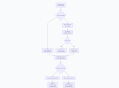
Think of building your toolkit with one indicator from each of these categories:

Trend-Following: Tells you the overall direction of the market.
Momentum: Helps you gauge the strength of a price move and identify potential reversals.
Volume: Confirms whether a price move is supported by market activity.
Volatility: Helps you set realistic profit targets and stop-losses.
1. Trend-Following Indicators (The Foundation)
These are essential for swing trading because "the trend is your friend."
Moving Averages (MAs): The most popular and versatile tools.
Trend Direction: Is the price above a key MA (like the 50-day or 200-day)? If yes, the trend is generally up.
Crossovers: A popular strategy is when a shorter-term EMA (e.g., 20-period) crosses above a longer-term EMA (e.g., 50-period), signaling a potential buy ("golden cross"). The opposite signals a sell ("death cross").
Dynamic Support/Resistance: Prices often pull back to a moving average before continuing the trend.
Simple Moving Average (SMA): The average price over a specific period (e.g., 50-day SMA). It smooths out price data to identify the direction of the trend.
Exponential Moving Average (EMA): Gives more weight to recent prices, making it more responsive to new information. This is often preferred by swing traders.
How to Use:
Ichimoku Kinko Hyo (The Ichimoku Cloud): A powerful all-in-one indicator that defines trend, support/resistance, and momentum.
Why it's great for swing trading: It provides a holistic view on one chart. If the price is above the cloud, the trend is bullish. If it's below the cloud, the trend is bearish. The cloud itself acts as future support and resistance.
Best for: Traders who want a comprehensive, visual system.
2. Momentum Indicators (Timing Your Entry/Exit)
These help you determine if a trend is strengthening or weakening and can signal overbought or oversold conditions.
Relative Strength Index (RSI): Measures the speed and change of price movements on a scale of 0 to 100.
Overbought/Oversold: Traditionally, an RSI above 70 suggests overbought conditions (potentially overextended and due for a pullback). An RSI below 30 suggests oversold conditions (potentially due for a bounce). Crucially, in a strong trend, the RSI can stay overbought or oversold for a long time.
Divergence: This is a powerful signal. If the price makes a new high but the RSI makes a lower high (bearish divergence), it indicates weakening momentum and a potential trend reversal. The opposite is true for bullish divergence.
How to Use:
Moving Average Convergence Divergence (MACD): A fan favorite that shows the relationship between two EMAs.
Signal Line Cross: When the MACD line crosses above the signal line, it's a buy signal. When it crosses below, it's a sell signal.
Zero Line Cross: When the MACD crosses above the zero line, it confirms bullish momentum. Crossing below confirms bearish momentum.
Divergence: Like the RSI, divergence between MACD and price can signal a potential reversal.
How to Use:
3. Volume Indicators (The Confirmation)
Volume is the fuel behind a move. A price breakout on low volume is suspect; one on high volume is much more convincing.
On-Balance Volume (OBV): A simple but effective indicator that adds volume on up days and subtracts volume on down days.
How to Use: The theory is that volume leads price. If the OBV is making new highs along with the price, it confirms the bullish trend. If the price is making new highs but the OBV is failing to make new highs (divergence), it's a warning sign that the trend is weak.
Volume-Weighted Average Price (VWAP): While often used by day traders, it's also very useful for swing traders, especially on daily charts.
How to Use: It tells you the average price a stock has traded at throughout the day, weighted by volume. Traders often use it as a dynamic support/resistance level. Buying near the VWAP in an uptrend can be a good strategy.
4. Volatility Indicators (Managing Risk)
These help you understand how much the price is moving, which is critical for setting stop-losses and profit targets.
Average True Range (ATR): Perhaps the most important indicator for risk management.
Setting Stop-Losses: Instead of using a fixed percentage, you can set your stop-loss a certain multiple of the ATR away from your entry price (e.g., 1.5 x ATR). This adapts your risk to the current market volatility. A highly volatile stock needs a wider stop.
Profit Targets: Similarly, you can set realistic profit targets based on volatility.
How to Use: It measures market volatility by calculating the average range between the high and low price over a period.
Bollinger Bands®: Consist of a middle SMA with two outer bands that represent standard deviations away from the average.
Volatility Squeeze: When the bands contract tightly, it indicates low volatility and often precedes a significant price move (a "breakout").
Dynamic Support/Resistance: Prices often bounce between the bands. A move to the upper band might suggest the asset is overbought, and a move to the lower band might suggest it's oversold—but this is not a signal to trade against the trend.
How to Use:
Sample Swing Trading Setups (Putting It All Together)
Bullish Setup:
Trend: Price is above the 200-day and 50-day EMA. The 50-day EMA is above the 200-day EMA.
Momentum: The stock pulls back to the 50-day EMA and the RSI dips to around 40 (showing a pause, not a breakdown).
Entry Signal: The price bounces off the 50-day EMA and the MACD gives a bullish crossover.
Volume Confirmation: The bounce occurs on higher-than-average volume.
Risk Management: Place a stop-loss below the recent swing low or using the ATR.
Breakout Setup:
Trend: The stock has been consolidating in a range after an uptrend.
Volatility: Bollinger Bands are squeezed, indicating low volatility.
Entry Signal: The price breaks above the upper Bollinger Band on high volume (confirmed by OBV rising).
Confirmation: The RSI moves above 60, confirming strong momentum.
Risk Management: Place a stop-loss below the consolidation range.
Final Words of Caution
Less is More: Don't use 10 indicators at once. Start with 2-3 that complement each other (e.g., EMA for trend, RSI for momentum, and ATR for risk).
Price Action is King: Indicators are derived from price. Always pay attention to key support/resistance levels, chart patterns (like flags, triangles, and head & shoulders), and candlestick patterns.
Backtest and Practice: Before using real money, test your chosen indicator combination on historical data (backtesting) and in a demo account to see how it performs.
By understanding the role of each type of indicator and combining them wisely, you can build a disciplined and effective approach to swing trading.