With the rapid development of blockchain technology, the creation and management of cryptocurrencies have become an essential part of the Web3 ecosystem. As a key component of the Crypto.com ecosystem, the CRO (Cronos) chain has attracted significant attention from developers and project teams due to its high performance, low cost, and compatibility with the Ethereum Virtual Machine (EVM). With the help of GTokenTool’s one-click token issuance platform, anyone can quickly and easily create and manage their own tokens on the CRO chain without requiring deep programming knowledge.
I. Background and Advantages of the CRO Chain
Cronos (CRO) is a high-performance public chain launched by Crypto.com, designed to provide infrastructure for decentralized finance (DeFi), non-fungible tokens (NFTs), and metaverse applications. The CRO chain features an EVM-compatible architecture, allowing developers to seamlessly migrate Ethereum-based smart contracts to the CRO chain while enjoying lower transaction fees and faster confirmation times. Below are the core advantages of the CRO chain for token issuance:
Low Cost and High Efficiency
Compared to the high gas fees on the Ethereum mainnet, transaction fees on the CRO chain are extremely low, often just a fraction of a dollar. This is particularly beneficial for frequent operations such as token creation, transfers, and market management. The block confirmation time on the CRO chain is typically within seconds, significantly improving the user experience.
EVM Compatibility
The CRO chain supports Ethereum’s Solidity language and tool ecosystem, enabling developers to easily reuse existing smart contract templates and reduce development barriers. This greatly shortens the development cycle for projects looking to issue tokens quickly.
Robust Ecosystem Support
The Crypto.com ecosystem provides a wide range of applications for the CRO chain, including DeFi protocols (e.g., VVS Finance), NFT marketplaces, and decentralized exchanges (DEXs). Token projects can list their tokens directly on these platforms, enabling rapid circulation and trading.
User-Friendliness
The CRO chain supports various wallets (e.g., Crypto.com DeFi Wallet, MetaMask), allowing users to interact with familiar tools. Combined with GTokenTool’s intuitive interface, even users with no programming experience can easily create tokens.
II. GTokenTool: The Ideal Token Issuance Tool for the CRO Chain
GTokenTool is a leading Web3.0 tool platform focused on providing one-click token issuance, token management, and market cap maintenance solutions. The platform supports multiple public chains, including the CRO chain (as well as Ethereum, Solana, BNB Chain, etc.), offering users a simple, secure, and efficient token issuance experience. Below are the core features of GTokenTool for token issuance on the CRO chain:
One-Click Token Issuance
GTokenTool simplifies the token creation process through a visual interface. Users only need to log in to the platform, connect a CRO chain-compatible wallet (e.g., MetaMask or Crypto.com DeFi Wallet), select the CRO chain as the target network, and fill in basic information such as token name, symbol, and total supply. The platform then generates and deploys the smart contract for the token. The entire process requires no coding and typically takes just a few minutes.
Diverse Token Mechanisms
GTokenTool supports various token models, including standard tokens, marketing reflection tokens, holder dividend tokens, and LP dividend tokens. These mechanisms cater to the needs of different projects. For example, the marketing reflection model incentivizes holders through transaction taxes, while holder dividends provide returns for long-term investors, making it particularly suitable for community-driven projects.
Batch Tools and Market Cap Management
In addition to token creation, GTokenTool offers features such as batch transfers, batch airdrops, and market cap management bots. Batch airdrops can be used to distribute tokens to community members, enhancing user engagement, while market cap management bots help project teams maintain token price stability through automated trading. These tools are especially efficient in the low-fee environment of the CRO chain.
Security and Transparency
All operations on GTokenTool are executed through smart contracts, ensuring transparency and reducing the risks associated with centralized platforms. The platform also implements strict review mechanisms to prevent fraudulent activities and ensure user asset security. Additionally, GTokenTool allows users to choose whether to retain minting or freezing permissions after token creation, providing greater flexibility in token design.
III. Detailed Process for Issuing Tokens on the CRO Chain
The process of issuing tokens on the CRO chain via GTokenTool is straightforward. Below is a typical step-by-step guide:
1. Preparation
-
Create a wallet: Ensure you have a CRO chain-compatible wallet (e.g., MetaMask or Crypto.com DeFi Wallet) installed and fund it with a small amount of CRO to cover transaction fees.
-
Access GTokenTool: Visit https://token.gtokentool.com (recommended for mobile use).
2. Connect Your Wallet
-
On the GTokenTool platform, click the "Connect Wallet" button and select MetaMask or another CRO chain-compatible wallet. Once connected, the platform will display your wallet address.
3. Enter Token Information
-
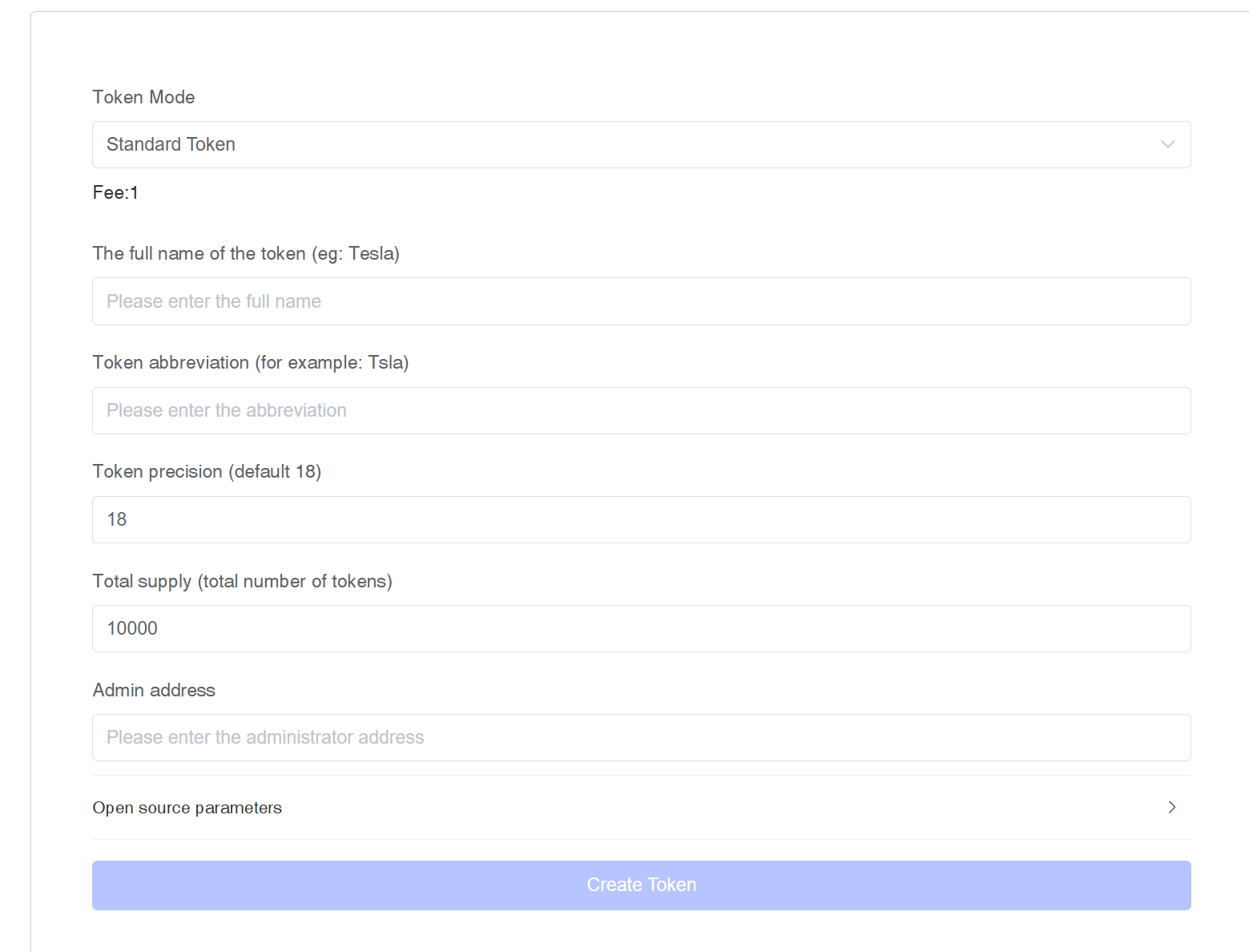
On the token creation page, enter the following details:
-
Token Name: e.g., "G Token" (supports Chinese and English, up to 32 characters).
-
Token Symbol: e.g., "GT" (up to 10 characters).
-
Total Supply: Set the total number of tokens to be issued, e.g., 10 million.
-
Advanced Settings (Optional): Include social links (Twitter, Telegram, etc.), permission delegation, transaction tax rates, etc.
4. Deploy the Smart Contract
-
After confirming the information, click the "Create" button. The platform will automatically generate the smart contract and prompt you to confirm the transaction via your wallet. The low fees on the CRO chain ensure this step costs very little (typically less than $0.1).
5. Token Management and Listing
-
Once the token is created, you can view its address, permission status, and other details on the GTokenTool management page. The platform supports one-click listing of tokens on CRO chain DEXs (e.g., VVS Finance) or distribution to community members via batch airdrops.
6. Follow-Up Actions
-
Update Metadata: The CRO chain allows modifications to token names, icons, and other metadata. GTokenTool provides easy-to-use update tools.
-
Liquidity Management: Use GTokenTool’s liquidity management features to add liquidity pools for your token, enabling trading on DEXs.
-
Market Promotion: Leverage GTokenTool’s batch tools and market cap management bots to efficiently promote your token and attract more users.
IV. Use Cases for Token Issuance on the CRO Chain
Token issuance on the CRO chain has a wide range of applications. Below are a few typical examples:
Community Tokens
Community-driven projects can issue tokens to incentivize user participation. For example, gaming guilds or NFT communities can distribute tokens to reward active members. GTokenTool’s batch airdrop feature enables precise distribution.
DeFi Projects
DeFi protocols can leverage the low fees and high efficiency of the CRO chain to issue governance or yield tokens. GTokenTool’s holder dividend and LP dividend models are particularly suitable for DeFi projects, incentivizing users to provide liquidity and hold tokens long-term.
NFTs and the Metaverse
The NFT ecosystem on the CRO chain is rapidly growing. Projects can issue tokens as a means of payment in NFT marketplaces or for use in virtual economies within the metaverse. GTokenTool also supports NFT minting, enabling projects to build comprehensive ecosystems.
Enterprise Tokenization
Businesses can tokenize assets, such as loyalty programs or point systems, on the CRO chain. The low cost of the CRO chain and the ease of use of GTokenTool make it accessible for small and medium-sized enterprises to participate in the blockchain economy.
V. Considerations and Risk Management
While the CRO chain and GTokenTool make token issuance convenient, users should keep the following in mind:
Permission Management
When creating a token, decide whether to retain minting or freezing permissions. It is recommended to revoke minting permissions after token distribution to build investor confidence. GTokenTool provides easy-to-use permission management tools.
Security Checks
Before deploying a token or listing it on a DEX, verify the smart contract address using a CRO chain blockchain explorer (e.g., Cronoscan) to avoid phishing sites or fraudulent activities.
Market Risks
Token prices may be affected by market volatility after issuance. While GTokenTool’s market cap management bots can help stabilize prices, project teams should still design sound economic models.
Compliance
Regulatory policies for cryptocurrencies vary by country and region. Project teams must ensure their token issuance complies with local regulations.
VI. Conclusion
The CRO chain, with its high performance, low cost, and EVM compatibility, is an ideal choice for token issuance. GTokenTool further lowers the technical barrier through its one-click token issuance, batch tools, and market cap management features, enabling both everyday users and project teams to easily participate in the Web3 ecosystem. As the CRO chain ecosystem continues to expand and GTokenTool moves toward implementing a DAO governance model, the potential for token issuance on the CRO chain will only grow.