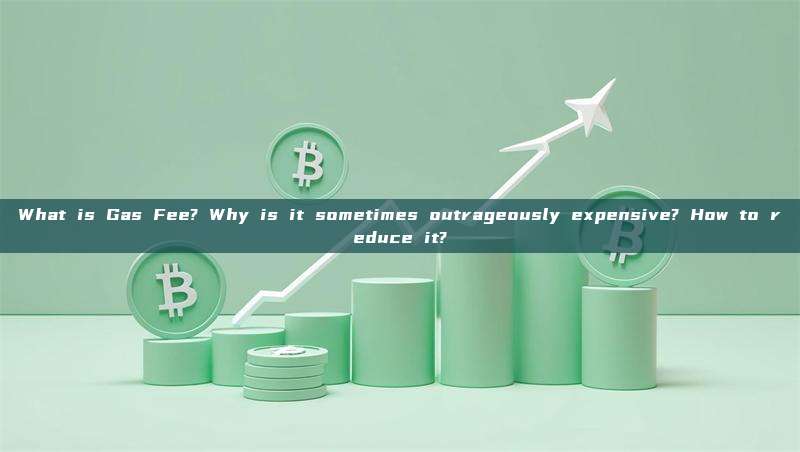
n early April 2026, Ethereum hit an all-time high of $4,887.59, yet the network was eerily quiet—average gas fees hovered around just 0.4 Gwei, meaning a simple transfer cost less than two cents. Flash back to a hyped NFT drop in 2025, and gas fees spiked past 2,400 Gwei. Some people paid over 1 ETH just in transaction fees to mint a single NFT. Same blockchain, same type of action—so why can fees be thousands of times more expensive? What exactly is a gas fee, why does it sometimes feel like highway robbery, and what can the average user do to save money?
This guide breaks it all down from square one, walks you through the ins and outs of gas fees, and gives you actionable strategies to keep more crypto in your wallet.
What is a gas fee?
A gas fee is the transaction cost you pay to execute an operation on a blockchain. It compensates validators (or miners) for the computational energy required to process your transaction and acts as an economic barrier against spam attacks.
Why does it get insanely expensive?
It all comes down to network congestion + an auction mechanism. Block space is limited. When thousands of people rush to use the network at the same time—say, for a hyped NFT mint or token launch—they bid against each other to get their transactions included first. Higher bids mean higher fees for everyone.
How can I save money on gas?
Three core strategies:
Time your transactions: The cheapest hours are typically between 2:00 AM and 6:00 AM UTC (late night in the U.S.).
Use Layer 2 networks: Chains like Arbitrum, Optimism, and Base slash fees by over 90% compared to Ethereum mainnet.
Customize your gas settings: Don't just click "High Priority" in your wallet—manually adjust the numbers.
In-Depth Breakdown
1. What Exactly Is a Gas Fee?
The term "gas" originated with Ethereum. Think of it like fuel for a car: just as a car needs gas to move, the blockchain needs computational "fuel" to process your transaction. Every action—from sending ETH to swapping tokens on Uniswap—consumes a certain amount of computational work. The gas fee is what you pay for that work.
Different chains use different names:
Bitcoin, Litecoin (PoW chains): Usually called "miner fees."
Ethereum, BNB Chain (Smart contract chains): Called "gas fees."
The function is the same across all chains: a blockchain transaction fee.
Gas fees serve three main purposes:
Compensate validators/miners: Rewards the people keeping the network secure and running.
Prevent network attacks: Adding a cost prevents bad actors from flooding the network with millions of spam transactions (a denial-of-service attack).
Prioritize transactions: When the network is busy, the highest bidders get processed first.
2. How Is a Gas Fee Calculated?
The basic formula is straightforward:
Total Fee = Gas Units Used × (Base Fee + Priority Fee)
Gas Units Used: Different operations use different amounts of computational work.
A simple ETH transfer: 21,000 gas (fixed).
A token swap on Uniswap: 150,000 – 200,000 gas (variable).
Complex DeFi interactions: 300,000+ gas.
Base Fee: This is the minimum price per unit of gas, set automatically by the network based on demand. If the previous block was more than 50% full, the base fee goes up. If it was less than 50% full, the base fee goes down. Important: This base fee portion is "burned" (destroyed) and removed from circulation forever.
Priority Fee (Tip): This is an extra amount you pay to validators to incentivize them to include your transaction right now instead of later. During congestion, this is your "cut the line" bribe.
The unit of measurement is Gwei. 1 Gwei = 0.000000001 ETH (one billionth of an ETH). We use Gwei because it's easier to say "10 Gwei" than "0.000000010 ETH."
Example: Base fee is 10 Gwei. You set a priority fee of 2 Gwei. You send ETH (21,000 gas).
Total Cost = 21,000 × (10 + 2) = 252,000 Gwei.
That equals 0.000252 ETH. At an ETH price of $3,000, that transaction costs about $0.76.
3. Why Does Gas Get "Ridiculously Expensive"?
Gas fees are a pure function of supply and demand.
(1) Block Space Is Scarce
Every block on Ethereum has a gas limit (around 22.5 million gas post-Pectra upgrade). When users submit more transactions than can fit in a block, an auction begins. To get into the next block, you have to outbid the person next to you.
(2) FOMO Events Cause Fee Tsunamis
History is littered with gas spikes:
CryptoKitties (2017): A virtual cat breeding game clogged Ethereum for days.
Stoner Cats NFT (2021): 10,000 NFTs sold out in 40 minutes, pushing gas over 600 Gwei.
Ethereum 10th Anniversary NFT (2025): Over 780,000 addresses minted, burning 153.7 ETH ($584k) in gas alone.
WLFI Token Launch (2025): Fees hit 100 Gwei within hours, consuming 129 ETH in network costs.
(3) Complexity Matters
Sending ETH is cheap (21k gas). Swapping tokens on Uniswap is moderate (~150k gas). Minting a complex NFT collection with custom code? That can be expensive even when the network is quiet, and exorbitant when it's busy.
4. Gas Fee Comparison Across Chains (Data Table)
Different blockchains have vastly different fee structures based on their technology.
| Blockchain | Typical Transfer Fee (USD) | Notes |
|---|---|---|
| Ethereum Mainnet | $0.02 – $1.50 | Dropped significantly post-Dencun upgrade; can still spike during FOMO events. |
| Arbitrum (L2) | ~$0.004 | Ethereum Layer 2; extremely cheap, EVM compatible. |
| Optimism (L2) | ~$0.006 | Ethereum L2; strong DeFi presence. |
| Base (L2) | ~$0.03 | Coinbase-incubated L2; uses ETH as gas. |
| Solana | $0.0005 – $0.002 | Ultra-low fees; high throughput (3700+ TPS). |
| BNB Chain | $0.03 – $0.15 | EVM compatible; large app ecosystem. |
| Bitcoin | Variable (based on bytes) | Not fixed; can cost several dollars during high mempool congestion. |
The takeaway is clear: Ethereum L2s and Solana are orders of magnitude cheaper than Ethereum mainnet. Since the Dencun upgrade in 2025, mainnet costs dropped about 95% (from ~$86 for a complex swap to ~$0.39), but L2s are still the cheapest way to use the Ethereum ecosystem.
5. How to Lower Your Gas Fees (Actionable Strategies)
Strategy 1: Pick the Right Time (The Easiest Win)
Gas fees follow a predictable daily cycle. According to network data, the cheapest time to transact is between 2:00 AM and 6:00 AM UTC (roughly 10:00 PM to 2:00 AM EST).
Pro Tip: Use a gas tracker like Etherscan Gas Tracker or Blocknative to see real-time prices. Weekends are generally 25-40% cheaper than weekdays.
Strategy 2: Use Layer 2 Networks (The Best ROI)
Layer 2s batch transactions off the main chain but inherit Ethereum's security. They reduce fees by 90% to 99% .
Options: Arbitrum, Optimism, Base, zkSync.
Real-World Example: A complex DeFi action on Arbitrum costs ~$0.32. On Ethereum mainnet? $45+. That's a 99% savings.
How to do it:
Use an official bridge (or a service like Across or Hop) to move ETH from mainnet to the L2.
Do all your trading and DeFi stuff on the L2 network.
If you need to cash out to mainnet, be aware of the 7-day withdrawal delay on Optimistic Rollups (or use a third-party fast bridge).
Strategy 3: Customize Gas Settings (Don't Trust the Default)
Wallets often default to "Aggressive" or "High" priority to ensure the transaction goes through instantly. You can almost always pay less.
Lower the Priority Fee: If you aren't in a rush, lower the "Max Priority Fee" by 10-20%. You might wait an extra minute or two, but you'll save significantly.
Don't Mess with the Gas Limit (Too Much): Unless you are a developer, leave the Gas Limit alone. Setting it too low causes the transaction to fail (and you still pay the fee). Setting it too high doesn't make it faster; it just puts a higher cap on what you could pay (though you only pay for what is used).
Strategy 4: Batch Transactions & Limit Approvals
Batch Transactions: Some wallets and dApps allow you to bundle multiple actions (like buying several NFTs) into one transaction, saving on the base 21k gas overhead.
Avoid Infinite Approvals: When connecting to a new DeFi protocol, never click "Infinite Approval." Manually set the exact amount of tokens you plan to swap. It's safer and slightly cheaper on gas.
Strategy 5: Switch Chains
If you don't need Ethereum specifically, use a chain built for low fees.
Solana: Ideal for high-frequency trading and memecoin swaps.
BNB Chain: A familiar EVM environment with sub-10-cent fees.
Questions (Q&A)
Q1: Are "gas fees" and "miner fees" the same thing?
Yes. It's just different terminology. Bitcoin uses "miner fee," while Ethereum and smart contract platforms use "gas fee." They both represent the cost of using the network.
Q2: What happens if my transaction fails? Do I get my gas fee back?
No. You will never get a refund on gas fees for a failed transaction. Even if the logic of the transaction errors out (e.g., "Out of Gas" or a failed swap), the validators still did the computational work to attempt the transaction, so they keep the fee.
Q3: Why is minting an NFT so much more expensive than sending ETH?
Sending ETH is a simple, fixed-cost operation. Minting an NFT involves interacting with a smart contract's code, which requires significantly more computational steps (storage writes, metadata updates). This consumes more gas units, hence the higher total cost.
Q4: What is Gwei?
Gwei is a denomination of Ether, like "cents" are to a dollar. 1 Gwei = 0.000000001 ETH. It's used to make gas prices human-readable.
Q5: Did the Dencun upgrade really fix gas fees?
It dramatically improved them for Layer 2 networks. Dencun (and later Pectra) introduced "blobs," which are a cheaper way for L2s to post data to Ethereum. This reduced L2 fees by over 90%. Mainnet fees also came down from their historic highs but are still subject to congestion spikes.
Q6: Is my money safe on a Layer 2?
Yes, mainstream L2s like Arbitrum and Optimism are widely considered safe. They derive their security from the Ethereum mainnet (Ethereum Settlement Layer). The primary risk is smart contract risk (bugs in the L2 code) and withdrawal delays (7-day challenge period for Optimistic Rollups).
Q7: Can I transact for free?
Generally, no. Gas fees are fundamental to blockchain security. However, some exchanges cover the fee for you when you withdraw, and some chains like TRON have energy/bandwidth models that can make transactions effectively free if you stake enough tokens.
Q8: Will gas fees ever stop being a problem?
The trend is toward cheaper fees. Ethereum is on a multi-year roadmap to scale. With upgrades like Pectra and the growth of L2 ecosystems, the average user should rarely (if ever) interact with the expensive Ethereum mainnet. The future is in Layer 2s and high-throughput Layer 1s like Solana.
Conclusion
Gas fees are the price of admission to a decentralized world. They fluctuate based on how many people are trying to use the same block space at the same time. It's a simple auction: when the network is empty, you pay pennies; when the network is the hottest party in crypto, you pay a premium.
Thankfully, the 2025-2026 upgrades (Dencun and Pectra) have changed the game, making Ethereum Layer 2s incredibly affordable.
For the savvy user, the playbook is clear:
Transact at night (U.S. time).
Use an L2.
Customize, don't automate.
Master these habits, and you'll navigate the blockchain with confidence—and a lot less sticker shock.