Liquidity Providing (LP) is the act of depositing your cryptocurrency into a "liquidity pool" on a Decentralized Exchange (DEX) so that others can trade against it. In return, LPs earn a proportional share of the trading fees generated within that pool.
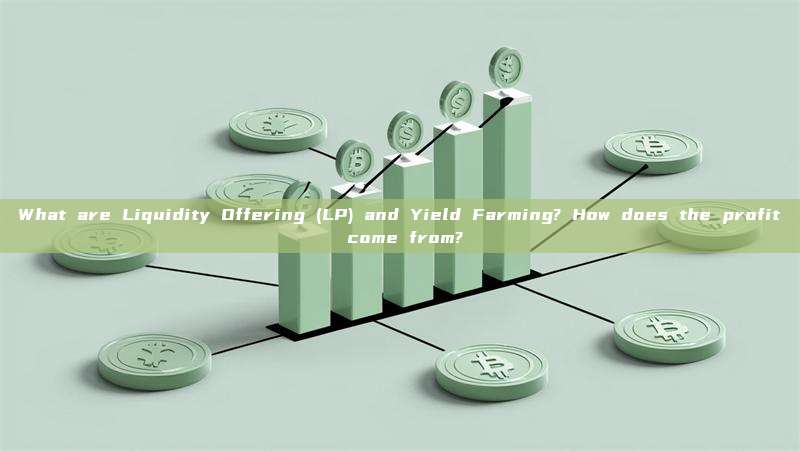
Yield Farming is the advanced version of LP—users take the LP tokens they've earned and stake them in other protocols to chase layered returns (Trading Fees + Lending Interest + Governance Token Incentives).
The Three Engines of Yield: ① Trading Fees (0.05%–0.3% taken from swaps and distributed to LPs); ② Protocol Token Incentives (platforms issue governance tokens to reward early liquidity); ③ Lending Interest (in lending markets, LPs earn interest paid by borrowers).
The Short Version: LP is like "being a landlord collecting rent." Yield Farming is like "taking that rent and investing it again." Profits come from the "toll fees" traders pay and the "bonus checks" platforms issue. However, these strategies come with significant risks, including Impermanent Loss, Smart Contract Vulnerabilities, and Token Depreciation.
1. Introduction: Why Should Your Crypto Be "Working"?
Imagine you have some ETH and USDC sitting in a wallet. If you do nothing for a year, their value only changes based on market price action. But what if you "leased" those assets to a Decentralized Exchange (DEX)? You'd essentially be the lubricant for other people's trades. Every time someone swaps tokens, you get a cut of the fee. Over a year, that passive income could boost your portfolio by 5% to 50% or more.
This is the core appeal of Liquidity Providing (LP) and Yield Farming in the world of Decentralized Finance (DeFi). As of early 2026, the Total Value Locked (TVL) in global DeFi protocols hovers between $130 billion and $140 billion, with millions of users putting their crypto to work.
Does it sound like "free money"? The reality is far more complex. Over 60% of LPs have lost money due to impermanent loss, smart contract hacks, or outright rug pulls. This guide will walk you through exactly what these terms mean, where the yield actually comes from, and—most importantly—what traps you need to avoid.
2. Body: Breaking Down LP and Yield Farming
2.1 What Is Liquidity Providing (LP)?
In traditional finance, if you want to trade stocks, you need a "market maker" to provide bids and asks so the market has liquidity. In a DEX, there's no central entity to do this job. Instead, the role is outsourced to regular users—that's you, the Liquidity Provider (LP) .
The core action of Liquidity Providing is depositing two assets of equal value (e.g., ETH and USDC) at a 50/50 ratio into a Liquidity Pool. Other users then trade against this pool. As an LP, you automatically earn a slice of every transaction fee (typically 0.05%–0.3%) proportional to your share of the pool.
Once you deposit, the DEX issues you an "LP Token"—a receipt representing your ownership stake in that pool. You can redeem this LP token at any time to withdraw your original assets (though the exact amount of assets you get back will vary based on price changes and trading activity).
A Real-World Example: You deposit 1 ETH (worth $3,000) and 3,000 USDC into an ETH/USDC pool, totaling $6,000 in value. You receive LP tokens representing your share. If the pool does $10,000 in trading volume that day with a 0.3% fee, the total fees collected are $30. If you own 1% of the pool, you pocket $0.30 in fees that day.
2.2 What Is Yield Farming?
If LP is "renting out a house for cash flow," then Yield Farming is "taking that rental income and putting it into a high-yield savings account to compound your returns."
The "farming" metaphor fits perfectly: You "plant" your crypto (deposit into a pool), periodically "harvest" rewards (claim fees and tokens), and can even "re-plant" those harvests (compound) for exponential growth.
The typical operational flow looks like this:
Step 1: Deposit two tokens on a DEX (like Uniswap or PancakeSwap) to receive LP tokens.
Step 2: Stake those LP tokens on the same platform or another aggregator (like Curve or Convex) to earn additional governance token rewards.
Step 3: Claim rewards periodically and either sell for profit or reinvest (compound).
Step 4: When ready to exit, unstake the LP tokens, then redeem them for the underlying assets.
The key difference between Yield Farming and a bank savings account is the dynamic yield. A bank gives you a fixed interest rate. In Yield Farming, the APY fluctuates wildly based on trading volume, token price, and market competition.
2.3 Where Does the Yield Come From? A Detailed Breakdown
The million-dollar question: Is this yield real value, or just "vaporware tokens"? The answer lies in three distinct sources.
Source ①: Trading Fees — The "Hard Cash" Income
Every time someone swaps tokens on a DEX, the platform takes a cut (usually 0.05%–0.3%). That fee is distributed proportionally to all LPs in that specific pool.
Example: Uniswap V3's ETH/USDC pool charges a 0.3% fee on swaps. The majority of that fee goes to LPs. Your fee income depends on two variables: Trading Volume (how busy the pool is) and Your Share Percentage (how big your deposit is relative to the total pool size).
Source ②: Governance Token Incentives — The "Sign-Up Bonus"
To attract liquidity, DeFi protocols often distribute their native governance tokens (like UNI, CAKE, or CRV) as an extra reward on top of fees. This is the main driver behind those insane 100%+ APYs you see advertised.
The Trap: If 80% of the displayed APY comes from a volatile token, and that token's price drops by 50%, your actual realized yield shrinks dramatically. That "100% APY" pool might only be paying you 20% in actual dollar terms after token depreciation.
Source ③: Lending Interest — Collecting Borrowers' Payments
If you participate in a lending protocol (like Aave or Compound), your assets are being lent out to borrowers rather than used for trading. Borrowers pay interest, and you, as the depositor, receive a share of that interest. As of 2026, lending stablecoins on Aave yields roughly 2%–5% APY. It's lower risk and lower return compared to volatile LP positions.
2.4 A Real Case Study: SushiSwap ETH-USDT Pool
Let's look at a real-world snapshot of the SushiSwap ETH-USDT pool (data from early 2025):
24H Trading Volume: $1.2 Billion
Total Value Locked (TVL): $4 Billion
Pure Fee APY (without incentives): ~17%
Total APY (with SUSHI token rewards): ~77.3%
Takeaway: Token incentives often make up the lion's share of the yield, but they are also the most unstable component.
2.5 The Core Risks: Why LPs Sometimes Lose Money
Risk ①: Impermanent Loss — The Silent Portfolio Killer
This is the most misunderstood yet most critical risk in DeFi. When you provide liquidity to an Automated Market Maker (AMM), the pool automatically rebalances your assets to maintain the 50/50 ratio. If the price ratio of the two tokens diverges significantly from the moment you deposited, the dollar value of your LP position ends up lower than if you had just held the tokens in your wallet. This is Impermanent Loss (IL) .
The Math (Approximate):
Price Change ±10% → ~0.1% IL
Price Change ±50% → ~2.0% IL
Price Change ±100% (2x or -50%) → ~5.7% IL
Price Change ±500% → ~25.5% IL
Example: You deposit 1 ETH ($2,000) + 2,000 USDC. If ETH pumps to $4,000, a simple "HODL" strategy would give you $6,000 total. As an LP, the pool automatically sold some ETH for USDC on the way up. Your LP position might now be worth roughly $5,656—a loss of about $344 compared to just holding.
Risk ②: Token Depreciation — The "High APY" Sugar Pill
New projects often lure in liquidity with 1,000%+ APY, but those rewards are paid in the project's own token. If that token trends toward zero, your high APY is meaningless.
Risk ③: Smart Contract Vulnerabilities
DeFi protocols run on code. If that code has a bug, a hacker can drain the funds. In 2025, a DEX lost $120 million due to a flaw that auditors missed.
Risk ④: Rug Pulls
Scammers create a token, seed a liquidity pool, wait for users to deposit valuable assets (like ETH or USDC), and then withdraw all the liquidity from the pool, leaving investors with a worthless token.
3. Data Comparison Tables
Table 1: Core Differences Between LP and Yield Farming
| Comparison Metric | Liquidity Providing (LP) | Yield Farming |
|---|---|---|
| Definition | Depositing two tokens into a DEX pool to earn trading fees. | Staking LP tokens further to earn layered rewards. |
| Complexity | Low: Deposit → Earn Fees. | Medium to High: Requires cross-protocol interaction. |
| Primary Income Source | Trading Fees (0.05%–0.3%) | Fees + Token Rewards + Lending Interest |
| Typical APY Range | 5%–25% | 5%–50%+ (including incentives) |
| Impermanent Loss Risk | Present, depends on asset volatility. | Present, layered exposure. |
| Management Frequency | Low (Set and forget). | Medium to High (Active strategy needed). |
| Ideal User | DeFi beginners seeking steady passive income. | Experienced users willing to manage positions actively. |
Table 2: LP Yield & Risk Profile by Asset Type
| Pool Type | Example Pair | Fee APY Range | Impermanent Loss Risk | Suitability |
|---|---|---|---|---|
| Stablecoin Pairs | USDC/USDT, DAI/USDC | 2%–8% APY | Near Zero | Conservative Investors |
| Blue-Chip + Stable | ETH/USDC, BTC/USDT | 5%–25% APY | Medium (±5-10%) | Moderate Risk Tolerance |
| Blue-Chip + Blue-Chip | ETH/BTC | 8%–30% APY | Low (High correlation) | Bullish on both assets |
| New Token + Blue-Chip | MEME/ETH | 50%–200%+ APY | Extremely High (±25%+) | High-Risk Speculators |
| Lending Deposits | Aave USDC | 2%–5% APY | None (Not LP) | Ultra-Conservative |
Table 3: 2026 Benchmark Yields on Major DeFi Platforms
| Platform | Type | Stablecoin APY | Major Pair APY | Risk Level |
|---|---|---|---|---|
| Aave V4 | Lending | 2%–5% | 3%–20% | Low |
| Curve Finance | Stable DEX | 2%–10% | — | Low-Medium |
| Uniswap V4 | General DEX | 5%–15% | 5%–25% | Medium |
| PancakeSwap | General DEX | 5%–15% | 5%–30% | Medium |
| Convex | Yield Aggregator | 8%–20% | 15%–50% | Medium-High |
| Pendle | Yield Tokenization | 5%–15% | 10%–40% | Medium-High |
4. Frequently Asked Questions (FAQ)
Q1: What's the difference between LP and Staking?
A: LP involves depositing two tokens into a DEX to earn trading fees and carries Impermanent Loss risk. Staking involves locking a single token into a network (like Ethereum 2.0) or protocol to secure the blockchain and earn network rewards. LP = You are a market maker. Staking = You are a network validator.
Q2: What's the difference between APR and APY?
A: APR (Annual Percentage Rate) is the simple interest rate without compounding. APY (Annual Percentage Yield) includes the effect of compounding interest. If a pool earns 0.1% daily, the APR is ~36.5%, but if you compound those earnings daily, the APY is closer to 44%. Marketing often uses APY because it looks bigger.
Q3: Is Impermanent Loss always a permanent loss?
A: Not necessarily. It's called "impermanent" because if the price ratio returns to its original state, the loss disappears. It only becomes permanent if you withdraw your liquidity while the price ratio is skewed. Pro Tip: Use pairs with high price correlation (e.g., ETH/BTC) or stablecoin pairs to minimize IL.
Q4: Where should a complete beginner start?
A: Stick to established, battle-tested platforms:
Uniswap (Ethereum ecosystem standard)
Curve (Specializes in stablecoins, lowest risk)
PancakeSwap (BNB Chain, cheaper gas fees)
Start with a Stablecoin pair (USDC/USDT) to understand the mechanics before adding volatile assets.
Q5: Can you still make money Yield Farming in 2026?
A: Yes, but the days of "DeFi Summer" 1,000% returns are over. The market is mature. Sustainable, real-yield ranges are typically 3%–30%. Any pool offering 100%+ APY is likely paying you in a token that is rapidly losing value.
Q6: How do I evaluate if a liquidity pool is safe?
A: Check three metrics:
TVL (Total Value Locked): Higher is safer (harder to manipulate).
24H Volume: Higher volume = more fee income.
APY Composition: Use tools like DefiLlama to see if the yield comes from real fees or inflationary token printing.
Q7: What are the "hidden costs" of providing liquidity?
A:
Gas Fees: On Ethereum, entering and exiting a pool can cost $10–$50+ depending on network congestion.
Slippage: Large trades execute at slightly worse prices than expected.
Deposit Spread: When depositing, you must have equal value of two assets; buying the one you lack incurs a trading fee.
Lock-up Periods: Some Yield Farming vaults lock your tokens for a set period.
Q8: How do I protect my funds?
A: ① Only use protocols audited by reputable firms (like Trail of Bits or Consensys Diligence). ② Use a hardware wallet (Ledger, Trezor). ③ Never click random "airdrop" links. ④ Diversify across protocols. ⑤ If an APY looks too good to be true, it's a scam.
5. Conclusion
Liquidity Providing (LP) and Yield Farming are the foundational engines that allow crypto assets to generate passive income in the DeFi ecosystem.
LP is the bedrock: You deposit two assets into a DEX pool, acting as the "oil" for trading. When others trade, you collect a fee. This democratizes the role of a traditional market maker.
Yield Farming is the advanced strategy: You take the receipt for your deposit (the LP token) and put it back to work, stacking layers of yield like a financial lasagna—fees, protocol bonuses, and lending interest all compound.
However, high yields are never risk-free. Impermanent Loss is the silent drag on portfolio performance, token incentives can evaporate in a bear market, and smart contract hacks are an ever-present danger. The 2026 DeFi landscape is one of rational yield generation, where sustainable returns fall between 3% and 30%. Anything promising 1,000% APY is almost certainly a ticking time bomb.
Three Golden Rules for Newcomers:
Start with Stablecoins. Master the mechanics on a USDC/USDT pair before touching volatile assets.
Stick to Blue-Chip Protocols. Uniswap, Curve, and Aave are the gold standard.
Calculate Your Real Yield. Real Yield = Fees + (Token Incentive Price × Likely Depreciation Rate) - Impermanent Loss - Gas Fees.
The era of putting your crypto in a "digital bank account" is here, but this bank has no teller window and no FDIC insurance. Due diligence is the only thing standing between you and a zero balance.