Most people judge a new meme coin by its logo and Twitter followers. That's exactly backwards.
If you want to know whether a freshly launched meme coin is a scam, look at the contract and the wallet distribution first — not the community chat. The token's code and on-chain behavior tell you more in 30 seconds than an hour of scrolling ever will.
Reason 1: Liquidity is the first thing to check — but not just whether it's locked.
Scammers know you've been trained to look for 'liquidity locked.' So they lock it — for a week, or with a tiny amount. That's not safety; it's theater. What matters is how much liquidity is locked and for how long. A shallow pool locked for 30 days is still a rug waiting to happen. A deep pool locked for a year with a reputable locker is a much stronger signal.
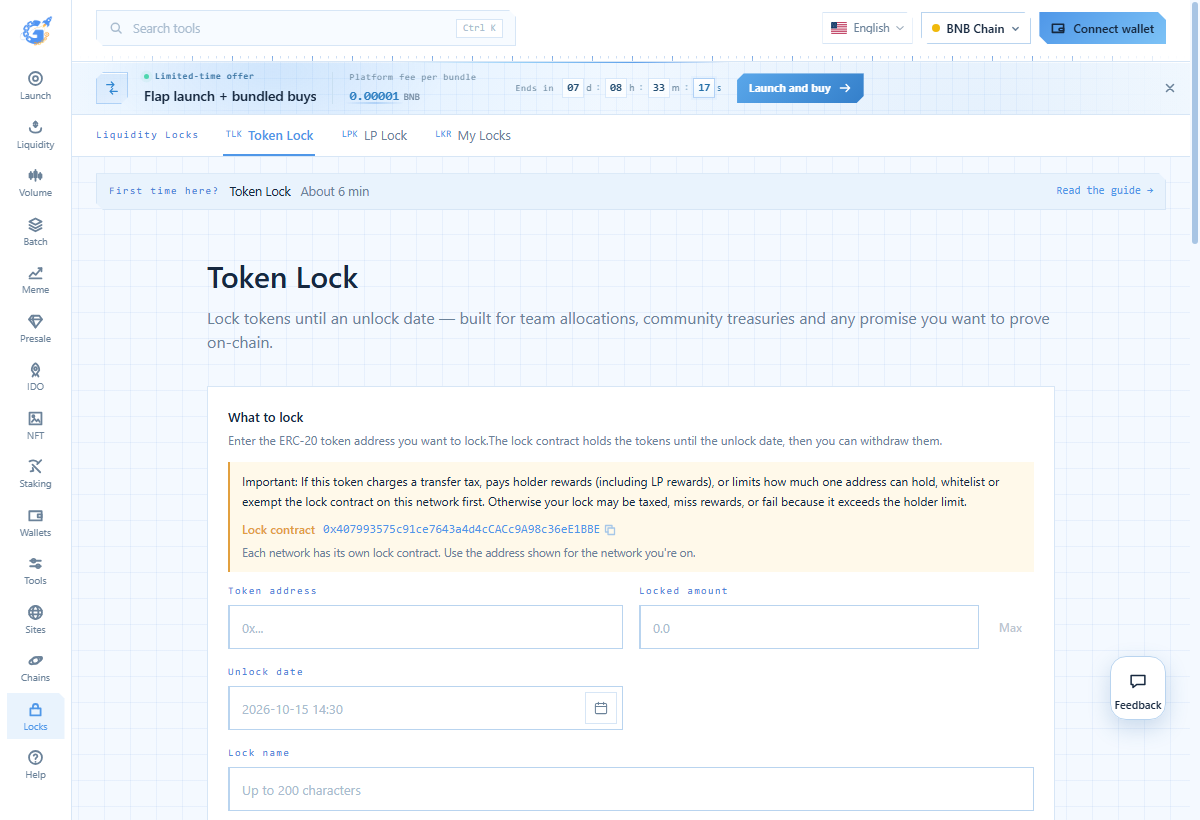
Also check who holds the LP tokens. If the deployer wallet still controls them, they can pull the plug at any moment. GTokenTool's Token Lock lets a project lock its own LP and puts the unlock date on-chain; as a buyer, check the locker address and date yourself instead of trusting a screenshot.
Reason 2: Holder concentration is the silent killer.
Even with locked liquidity, a scammer can dump on you if they hold most of the supply. Check the top 10 holders. If the deployer wallet or a cluster of wallets created at the same time holds more than 30% of the supply, that's a red flag. Legitimate projects often have a large holder (the team or treasury), but it should be transparent and ideally vested.
Use a block explorer or a token analytics tool to see the top holders. If you see 10 wallets each holding exactly 2% and all created within minutes of launch, that's a classic sybil distribution — the scammer is preparing to dump across many wallets to avoid detection.
Reason 3: The contract itself can be a trap.
Many meme coin scams hide malicious functions in the contract. The most common: a mint function that lets the owner create unlimited tokens, a blacklist that prevents you from selling, or a trading cooldown that only applies to buyers. Before buying any new token, paste the contract address into a scanner like GoPlus or Token Sniffer. If the contract is unverified or has hidden owner privileges, walk away.
Also check if the contract has a 'max transaction' or 'max wallet' limit that is set very low — that can be used to prevent large sells while allowing the scammer to exit first.
The strongest counter-argument: 'But I've seen coins with locked liquidity and fair distribution still rug.'
True. A scammer can lock liquidity, distribute tokens widely, and still dump via a hidden backdoor or by slowly selling over time. But that doesn't mean the checks are useless — it means you need to add one more: check the deployer's history. If the wallet that created the token has previously launched other tokens that went to zero, that's a pattern. Use a tool like Bubblemaps or a wallet tracker to see if the deployer is a serial rugger.
I still hold my position: the majority of quick rugs are lazy and leave obvious on-chain clues. Doing the three checks above filters out 90% of the garbage. The remaining 10% require deeper due diligence, but you're already ahead of most buyers.
What to do before you ape in:
- Check liquidity lock: Use the token's locker or a scanner to confirm the amount and duration. If it's locked for less than 30 days, or the locked amount is small enough that a single sell would drain it, be skeptical.
- Check top holders: If the top 10 wallets hold more than 30% and aren't clearly vested, avoid.
- Scan the contract: Use GoPlus or Token Sniffer to check for mint, blacklist, or owner-only functions.
- Check deployer history: See if the creating wallet has a track record of failed tokens.
If you're on the other side — launching a token — you can make these checks easy for buyers by using transparent tools. For example, GTokenTool's Token Creator lets you deploy a standard token with no hidden functions, and you can lock liquidity with their Token Lock to prove you're not going anywhere.
Don't trust the logo. Trust the chain.
FAQ
How can I tell if a meme coin is a scam before buying?
Check three things: 1) Liquidity is locked for at least 30 days and the locked amount is meaningful relative to the daily volume. 2) Top 10 holders don't control more than 30% of supply unless vested. 3) Contract has no mint, blacklist, or hidden owner functions. Use scanners like GoPlus or Token Sniffer.
What is a liquidity lock and why does it matter?
A liquidity lock prevents the deployer from withdrawing the liquidity pool for a set period. It matters because without a lock, the deployer can pull the liquidity and steal your funds (a rug pull). However, a lock is only as good as its duration and the amount locked — a 7-day lock on a shallow pool is weak.
How do I check the top holders of a new meme coin?
Use a block explorer like BscScan or Solscan and go to the token's holders tab. Alternatively, use token analytics tools like Bubblemaps or DexTools. Look for clusters of wallets created at the same time holding large percentages — that's a red flag for sybil distribution.
Can a scammer rug a token even if liquidity is locked?
Yes, if they hold a large portion of the supply and dump it on the market, or if the contract has a hidden mint function. That's why you must also check holder distribution and contract permissions. Locked liquidity alone is not enough.