Most cross-chain bridges are riskier than the tokens you're moving, and the ones with the loudest marketing are often the worst offenders.
Reason 1: Validator Centralization Is a Ticking Time Bomb
Many bridges rely on a small set of validators or a multisig to approve transfers. If those keys are compromised, funds vanish. I've seen bridges with just 5 validators holding billions. That's not decentralization; it's a single point of failure. Always check the validator set size and whether it's permissioned. If you can't find that info easily, that's a red flag.
Reason 2: Liquidity Pools Are Honey Pots for Exploits
Bridges that use liquidity pools (like many AMM-based bridges) are vulnerable to price manipulation and flash loan attacks. If the pool's total value locked (TVL) is low relative to the bridge's volume, an attacker can drain it. I look for bridges with deep liquidity and time-weighted average price (TWAP) oracles, but even those aren't foolproof. The safest bridges often use native asset minting and burning, not pooled liquidity.
Reason 3: The 'Audited' Label Is Often Meaningless
An audit is a snapshot, not a guarantee. Many exploited bridges had audits. What matters more is the team's response to past incidents and whether they have a bug bounty. Check if the audit was done by a reputable firm and if the code is immutable. If the bridge can be upgraded by a single admin key, walk away.
The Strongest Counter-Argument
Some argue that bridges are essential for a multichain future and that risks are manageable with insurance or diversification. I agree that bridges are necessary, but that doesn't mean you should use just any bridge. Insurance often has caveats, and diversification across risky bridges just multiplies your exposure. I still hold that you should only use bridges with a proven track record, large validator sets, and deep liquidity—and even then, never bridge more than you can afford to lose.
What to Actually Do
Do your own research: Check the validator set, TVL, audit reports, and incident history. Use tools like DefiLlama to compare bridge volumes and TVL.
Start small: Test with a tiny amount first. If the bridge works smoothly, you can increase.
Use established bridges: I stick to a few like Arbitrum's native bridge, Polygon's PoS bridge, and Hop Protocol for L2s. They're not perfect, but they have better security postures.
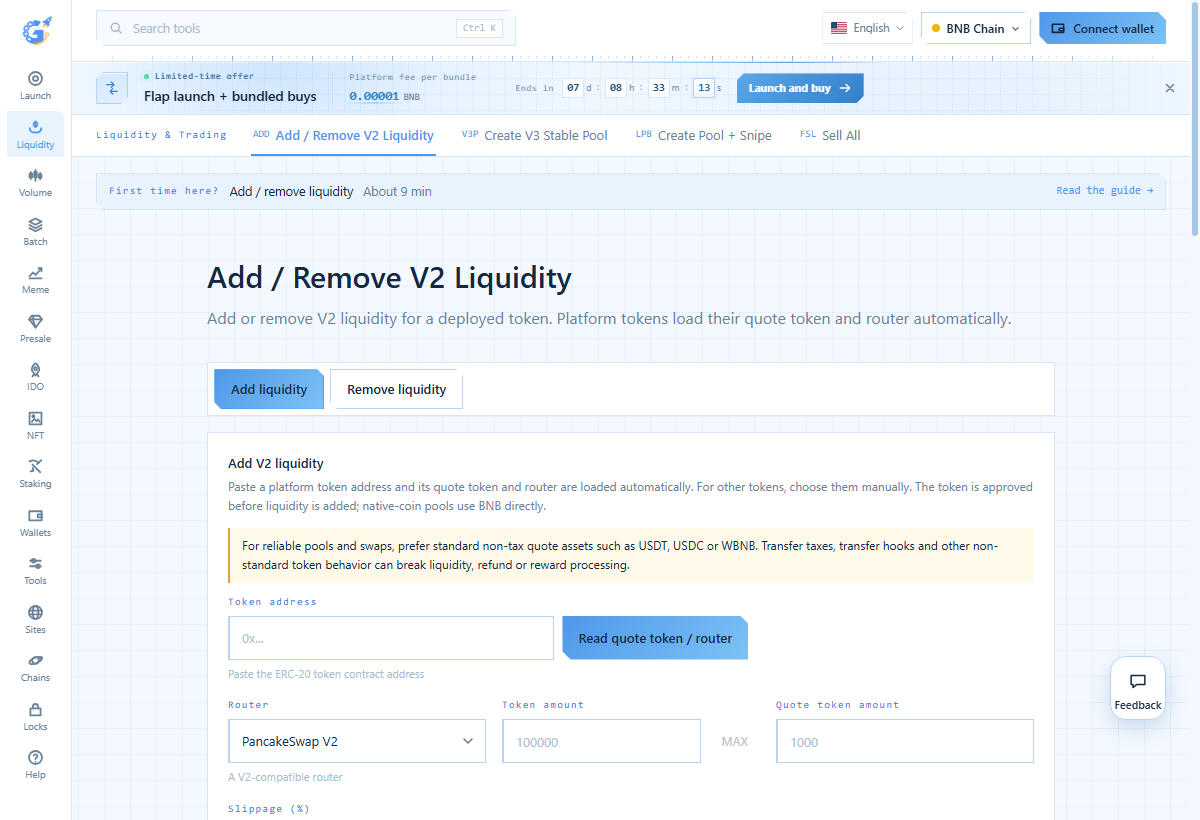
Consider alternative tools: For moving tokens across chains, sometimes it's safer to use a centralized exchange as an intermediary, despite the counterparty risk. Also, if you're creating tokens, use tools like GTokenTool's Token Creator to deploy on multiple chains directly, avoiding bridges altogether.
Bridges are a necessary evil, but treating them as trustless is a mistake.
FAQ
What is the safest cross-chain bridge?
There's no absolute safest, but native bridges like Arbitrum's and Polygon's PoS bridge are generally more secure because they rely on the underlying chain's security. Always check validator set size and TVL.
How do I know if a bridge is risky?
Look for red flags: small validator sets, low TVL, unaudited code, admin keys that can upgrade contracts, and past exploits. If the team is anonymous and the code is closed-source, avoid it.
Can I avoid bridges entirely?
Sometimes. If you're creating a token, you can deploy it natively on multiple chains using tools like GTokenTool's Token Creator, eliminating the need to bridge. For moving existing assets, centralized exchanges are an alternative but come with counterparty risk.
What are the fees for using a cross-chain bridge?
Fees vary widely: typically 0.1% to 0.5% of the transfer amount, plus gas. Some bridges charge a fixed fee. Always compare before bridging.