While creating a secure, valuable, and widely adopted cryptocurrency takes months or years of development and community building, you can create the basic digital asset itself in under 15 minutes using modern tools.
This guide will show you two fast methods: one on a blockchain platform (Binance Smart Chain) and one by forking an existing open-source coin.
Important Disclaimer First
This is for Educational Purposes: The token you create will have no inherent value, liquidity, or security audit. It's a learning exercise.
Not a Financial Venture: Do not invest significant money into a token created this way or expect others to. A real project requires a detailed plan, smart contract audits, and a strong community.
Gas Fees: You will need to pay small network fees (in BNB or ETH) to deploy your contract.
Method 1: Creating a BEP-20 Token on Binance Smart Chain (Easiest & Fastest)
Let's assume we've conceived a meme coin called "TECHOG" and decided to launch it on the Solana chain. Here are the detailed steps to create it using GTokenTool.
Tool Preparation: Visit
https://GTokenTool.com/tokenfactoryand connect a Solana-compatible wallet (like Phantom or Solflare). Ensure the wallet has enough SOL to cover the creation fee and subsequent Gas fees.
Step 1: Basic Token Information Setup
In the creation interface:
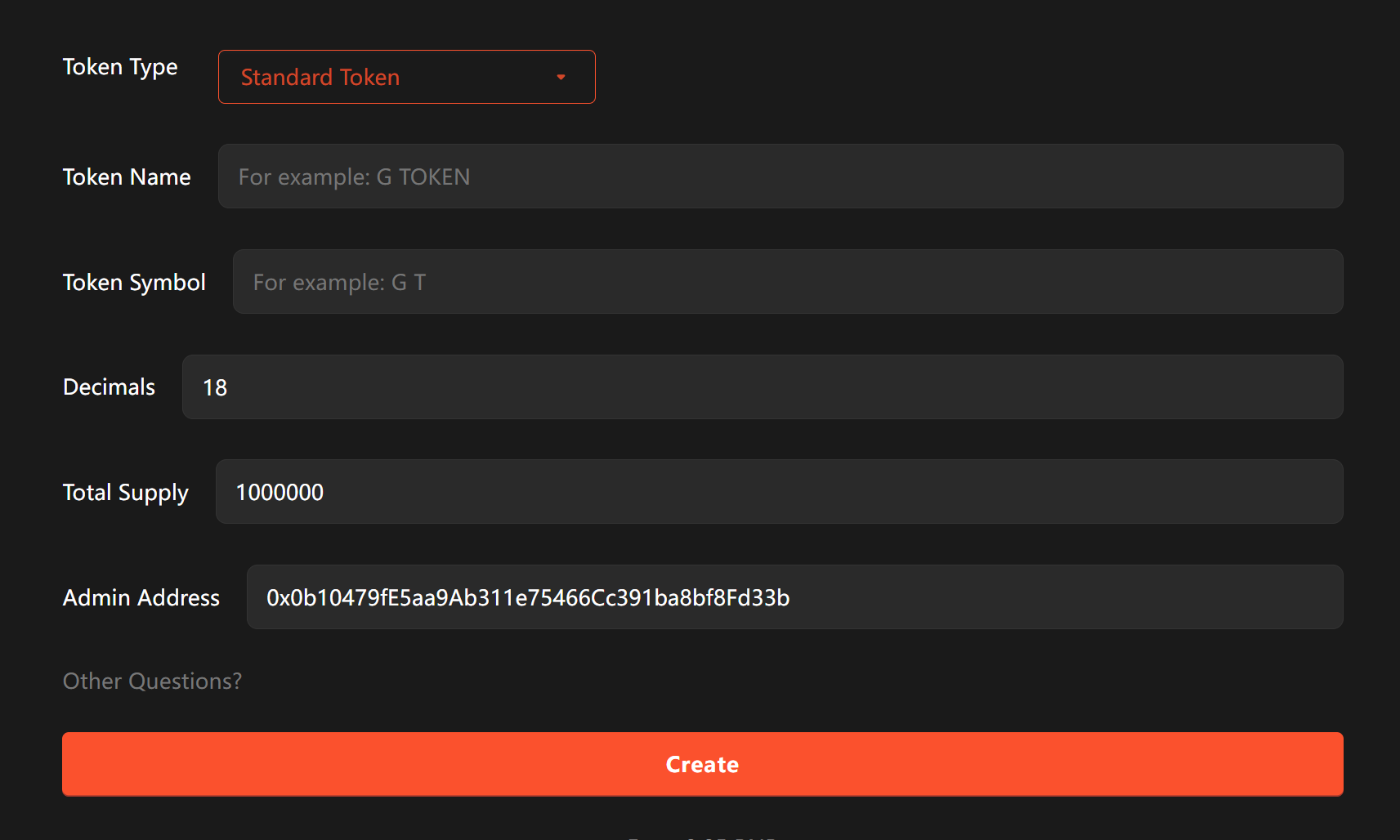
Enter the Token Name, e.g., TECHOG.
Enter the Token Symbol, e.g., TECHOG.
Enter the Total Supply, e.g., 1,000,000,000 (1 billion).
Set the Decimal Places, usually 6 or 9, which determines the token's divisibility.
Step 2: Advanced Feature Configuration (Optional but Important)
GTokenTool offers various advanced features to make your token more attractive:
Upgradeability: Recommended to enable. This allows you to fix bugs in the code or add new features to the token in the future.
Freeze Authority: Recommended to renounce. This means that after creation, no one can freeze tokens held by users. This is a key step in building trust, showing your community the project is decentralized and censorship-resistant.
Mint Authority: Recommended to disable. Disabling this ensures you cannot create more tokens later, guaranteeing a fixed total supply, which is crucial for establishing token scarcity and value.
Token Icon: Upload an eye-catching icon that fits your meme culture (e.g., a 256x256 pixel PNG image).
Step 3: Creation & Deployment
Double-check all information, especially the supply and whether you've renounced authorities. Once confirmed, click the "Create Token" button. Your wallet will pop up a transaction confirmation request; confirm and pay a small SOL fee. Within seconds, your meme coin is born! The system will provide a token address – be sure to save this address securely, as it is your token's unique ID on the blockchain.
Method 2: Forking an Existing Cryptocurrency (More Advanced)
This involves taking the complete source code of an established project (like Shiba Inu or SafeMoon), changing its name and parameters, and compiling/deploying it yourself. This is how many "meme coins" are born.
Time: ~15-30 Minutes
Tools: Remix IDE, or a local development environment like Hardhat.
Find the Code: Go to a blockchain explorer like BscScan and find a token similar to what you want. Look for the "Contract" tab and click "Source Code." Copy it.
Modify It: Use a code editor to change all the obvious details: the token's name, symbol, total supply, and any specific functions (like fees or rewards). Warning: Modifying complex code without understanding it is a great way to create a broken or exploitable contract.
Compile and Deploy: Follow the same Remix steps as in Method 1 to compile and deploy your forked contract.
Frequently Asked Questions (Q&A)
Q1: Is the cryptocurrency I create a real "Bitcoin" or "Ethereum"?
No. What you created is a Token based on an existing blockchain (like Binance Smart Chain), not a Coin with its own independent blockchain.
Token: Like ERC-20/BEP-20 tokens created on Ethereum or BSC. They rely on the security and infrastructure of an existing blockchain. What you just created is this type.
Coin: Like Bitcoin or Ethereum itself, which have their own independent, native blockchain networks. Creating a new coin requires building and maintaining a complete blockchain, which is an extremely complex and time-consuming process.
Q2: How much does it cost to create this token?
The cost primarily comes from the network gas fees for deploying the smart contract.
On Binance Smart Chain (BSC): Typically only a few dollars worth of BNB.
On the Ethereum Mainnet: Can be very expensive, ranging from tens to hundreds of dollars worth of ETH, depending on network congestion.
Creating the token itself costs nothing, but interacting with it (deploying, transferring) requires paying gas fees.
Q3: After I create the token, how can others buy it?
Simply creating a token does not mean it's automatically listed for trading. For others to buy it, you need to:
Provide Liquidity: You need to deposit your token and an equal value of BNB (or another base coin) into a liquidity pool on a Decentralized Exchange (DEX) like PancakeSwap.
Create a Trading Pair: Create a trading pair (e.g., MTK/BNB) on PancakeSwap.
Share the Token Address: Others need to know your token's contract address (the one you got after deploying in Remix) to import it into their wallet and purchase it.
Warning: Providing liquidity requires investing real money and carries risks like "impermanent loss."
Q4: Can I modify the total supply of the token? For example, create more later?
This depends entirely on the rules you code into the smart contract.
The contract in the example above mints the entire supply once in the constructor and sends it to the deployer. This contract does not have a function to create more tokens.
If you want the ability to mint more, you need to include a
mintfunction that only you (the owner) can call, written into the contract from the start. This gives the creator significant power, so it must be designed and managed very carefully in serious projects.
Q5: Can I create a token on other blockchains?
Absolutely! BSC was used above because of its low fees and high speed. The same concept applies to many other blockchains:
Ethereum (ERC-20): The original platform, but with higher gas fees.
Polygon (MRC-20): A faster Ethereum sidechain with very low fees.
Solana (SPL Token): Uses the Rust language and offers very fast transactions.
Avalanche, Fantom, etc.
Each chain has its own unique tools and deployment processes, but the core logic is similar: write contract -> compile -> deploy.
Q6: Is this legal? What are the risks?
Legality: The act of creating a token itself is a legal technical activity in most jurisdictions, similar to writing an open-source program.
Risks:
Regulatory Risk: If you sell the token to the public and raise funds (i.e., conduct an ICO/IEO), it could be considered a securities offering by regulators (like the SEC in the US), subject to complex laws and regulations.
Security Risk: If there are vulnerabilities in your smart contract code, hackers could steal all the funds. This is why professional projects require security audits.
Scam Risk: Creating "Pump and Dump" or "Honeypot" scam tokens is illegal and unethical.
Key Principle: Treat token creation as a powerful learning tool, not a get-rich-quick scheme. Always do your own research and understand all risks before investing significant money or promoting it to others.
What To Do After The 15 Minutes (The Real Work)
Creating the token is just step one. To make it into something more, you would need:
Create a Website: A professional-looking site explaining your project.
Build Liquidity: You need to create a trading pair on a Decentralized Exchange (DEX) like PancakeSwap. This requires you to lock up both your new token and an equal value of BNB. This is where real money is risked.
Create a Community: Use Twitter, Telegram, and Discord to build a following.
Get an Audit: A security audit from a firm like CertiK or Hacken is essential for gaining trust. This can cost tens of thousands of dollars.
Create a Roadmap: Have a clear, public plan for your project's future.
Creating the digital asset is fast and easy. Building a project that gives it value and utility is the true challenge. Use this guide as a first step to learn, not as a get-rich-quick scheme.