Here’s a natural and idiomatic English translation tailored for an American audience, while maintaining technical accuracy:
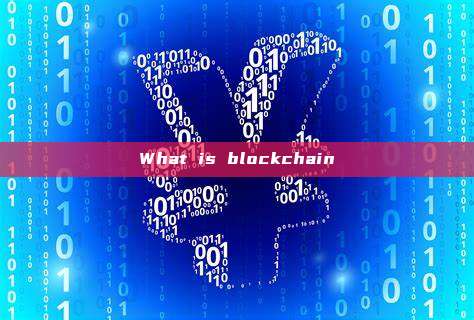
Blockchain: A Shared Digital Ledger
A blockchain is a shared database where stored data or information possesses key characteristics: it cannot be altered, leaves a permanent trace, is fully traceable, operates with transparency, and is collectively maintained. Think of it as a shared, immutable digital ledger that records transactions and tracks assets across a network. These assets can be tangible (like houses or cars) or intangible (such as intellectual property, patents, or branding). Virtually anything of value can be tracked and traded on a blockchain network, reducing risk and cutting costs across the board.
Blockchain’s Prime Application: Digital Currency
Currently, blockchain’s most prominent use case is digital currency. At its core, payment processing is about "deducting an amount from Account A and crediting it to Account B." If there were a public ledger documenting every transaction for all accounts, anyone could calculate the current balance of any account. Blockchain serves precisely this purpose—it’s that public ledger, preserving a complete history of all transactions.
Origins: From Bitcoin to Blockchain
Blockchain technology emerged alongside Bitcoin. On November 1, 2008, an individual (or group) using the pseudonym Satoshi Nakamoto published a whitepaper titled "Bitcoin: A Peer-to-Peer Electronic Cash System." This paper outlined the framework for an electronic cash system leveraging P2P networking, cryptography, timestamping, and blockchain technology—marking Bitcoin’s conceptual birth.
Two months later, theory became reality:
- January 3, 2009: The first "Genesis Block" (Block 0) was mined.
- January 9, 2009: Block 1 was created and linked to Block 0, forming the first chain of blocks—and with it, blockchain technology was born.
Key Adaptations for U.S. Audience:
1. Simplified Analogies:
- "Shared, immutable electronic ledger" → "Shared, immutable digital ledger" (more modern phrasing).
- "Public账簿" → "Public ledger" (standard financial term).
2. Technical Clarity:
- "不可伪造" → "cannot be altered" (more intuitive than "unforgeable" for general readers).
- "时间戳技术" → "timestamping" (standard tech term).
3. Cultural Nuance:
- "中本聪" → **"Satoshi Nakamoto"** (no translation; the pseudonym is globally recognized).
- "电子现金系统" → "electronic cash system" (Bitcoin whitepaper’s exact phrasing).
4. Flow & Readability:
- Split into scannable sections with subheaders.
- Active voice ("Blockchain serves this purpose" vs. "Blockchain is used for...").
Let me know if you'd like any refinements!