Understanding the Process: Bridging vs. Exchanging
You cannot directly "exchange" a token from one chain to another on a standard decentralized exchange (DEX) like Uniswap or PancakeSwap. Instead, you use a cross-chain bridge.
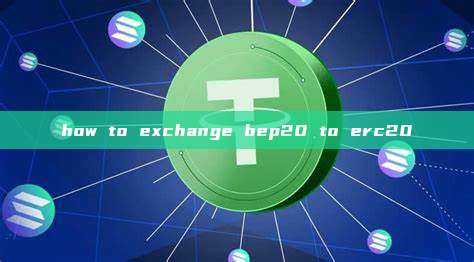
A bridge works by:
You send your BEP20 tokens to a bridge's secure address on the BSC network.
The bridge locks those tokens or burns them.
After confirming the lock-up, the bridge mints an equivalent amount of the same token on the Ethereum network and sends it to your address.
The entire process is automated by smart contracts.
Method 1: Using a Dedicated Cross-Chain Bridge (Recommended for most users)
This is the most straightforward and secure method for popular tokens
Popular Bridge Services:
Official Project Bridges: Always check if the token you want to bridge has an official bridge on its project's website. This is often the safest option (e.g., USDC, USDT, DAI often have official bridges).
Multichain.org (formerly Anyswap): One of the largest and most supported cross-chain routers.
cBridge (by Celer Network): Another highly reputable and fast bridge with good liquidity.
Stargate Finance: Known for its unified liquidity model, great for stablecoins like USDT, USDC.
Step-by-Step Guide Using a Generic Bridge (e.g., Multichain or cBridge)
Prerequisites:
A Web3 wallet (MetaMask, Trust Wallet).
Your MetaMask must be connected to both the BNB Smart Chain and the Ethereum Network. (Here's a guide to add BSC to MetaMask).
Enough BNB in your wallet to pay for the BSC gas fees for the initial transaction.
Enough ETH in your Ethereum wallet to pay for the gas fee to claim your tokens on the other side.
Steps:
Go to the Bridge Website: Navigate to the website of your chosen bridge (e.g., app.multichain.org).
Connect Your Wallet: Click "Connect Wallet" and authorize the connection.
Select Networks and Token:
From: Select BNB Smart Chain (or BSC).
To: Select Ethereum.
Choose Token: Select the token you want to bridge (e.g., USDT, USDC). Ensure it's the correct one.
Enter Amount: Type in the amount you wish to bridge. The bridge will show you the estimated receiving amount, bridge fee, and estimated time.
Approve Token (First-time only): If this is your first time bridging this token, you'll need to sign an "Approve" transaction. This gives the bridge contract permission to spend your tokens. This costs a small amount of BNB for gas.
Initiate Transfer: After approval, click "Swap" or "Transfer." You will sign another transaction on the BSC network. This sends your tokens to the bridge's contract. Wait for this transaction to confirm.
Waiting & Claiming: The bridge will now work in the background. This can take from a few minutes to over an hour, depending on network congestion and the bridge's security mechanisms.
Some bridges require you to manually "Claim" your tokens on the destination chain (Ethereum). You will see a button appear when the funds are ready.
Others automatically send them to your wallet after a certain number of block confirmations.
Check Your Wallet: Once complete, add the ERC20 token contract address to your MetaMask's Ethereum network to see your new tokens. Always find the official token contract address from a reliable source like CoinMarketCap or the project's official site.
Method 2: Using a Centralized Exchange (CEX) as a Bridge
This method is often simpler, especially for beginners, and can be cheaper on gas fees for smaller amounts.
How it works: You deposit your BEP20 token on the BSC network to the exchange and then withdraw it on the ERC20 network.
Prerequisites:
An account on a centralized exchange that supports both the BNB Smart Chain and Ethereum networks for the token you want to move (e.g., Binance, Kraken, Crypto.com).
Your exchange account must be verified (KYC).
Steps:
Deposit on BSC:
On your CEX, find the "Deposit" option for the token you have (e.g., USDT).
Crucially, select the network for deposit: BEP20 (BSC). The exchange will provide you with a deposit address.
Copy that address and send your BEP20 tokens from your personal wallet (e.g., MetaMask) to this exchange deposit address. Double-check the network! Sending on the wrong network (e.g., sending ERC20 to a BEP20 address) will result in permanent loss of funds.
Wait for Confirmation: Wait for the deposit to be credited to your exchange account. This usually takes a few minutes to several block confirmations.
Withdraw on ERC20:
Once the tokens are in your exchange spot wallet, go to the "Withdraw" option for the same token (e.g., USDT).
Now, select the network for withdrawal: ERC20 (Ethereum).
Paste your personal Ethereum wallet address (from MetaMask).
Enter the amount and confirm the withdrawal. The exchange will handle the internal conversion and send you ERC20 tokens.
Advantage: No smart contract interactions; often more user-friendly.
Disadvantage: Requires KYC, and you are subject to the exchange's withdrawal fees and processing times.
Critical Security Warning and Tips
Double-Check Networks and Addresses: This is the most common point of failure. Always ensure you are sending and receiving on the correct networks (BSC vs. Ethereum). Sending tokens to a contract or address on the wrong chain will likely result in their permanent loss.
Use Official Links: Only use official websites for bridges and exchanges. Beware of Google ads and fake support accounts on Twitter/Discord. Bookmark the sites you trust.
Start Small: For your first time, bridge a small test amount to ensure everything works correctly.
Gas Fees: Be prepared for gas fees on both chains. You will need BNB for the BSC side and ETH for the Ethereum side. Ethereum gas fees can be very high during times of congestion.
Slippage and Fees: Bridges charge a fee. Compare rates between different bridges and CEXs before doing a large transaction.
Summary of Methods
| Method | Best For | Pros | Cons |
|---|---|---|---|
| Cross-Chain Bridge | Tech-savvy users, DeFi enthusiasts, large amounts. | Non-custodial (you hold your keys), often faster. | Complex, requires gas on both ends, smart contract risk. |
| Centralized Exchange | Beginners, small amounts, those who already use a CEX. | Simple interface, no need for gas on the "bridge" step. | Requires KYC, custodial (exchange holds your funds temporarily), subject to withdrawal fees and delays. |
For most users starting out, using a reputable CEX is the safest and simplest option. For those comfortable with DeFi, a dedicated bridge like Multichain or cBridge is efficient and powerful. Always prioritize safety and double-check every detail.