How much money do I actually need to launch my own cryptocurrency in 2026?That’s the number one question flooding my DMs and community chats lately. The barrier to entry in the blockchain space has dropped at a pace you can literally see. Just a few years ago, launching a token meant hiring a Solidity developer to write a custom smart contract, shelling out thousands of dollars for a security audit, and paying deployment gas fees that could easily hit several hundred bucks during peak hours. By 2025 and into 2026, platforms like GTokenTool have completely flipped that script.
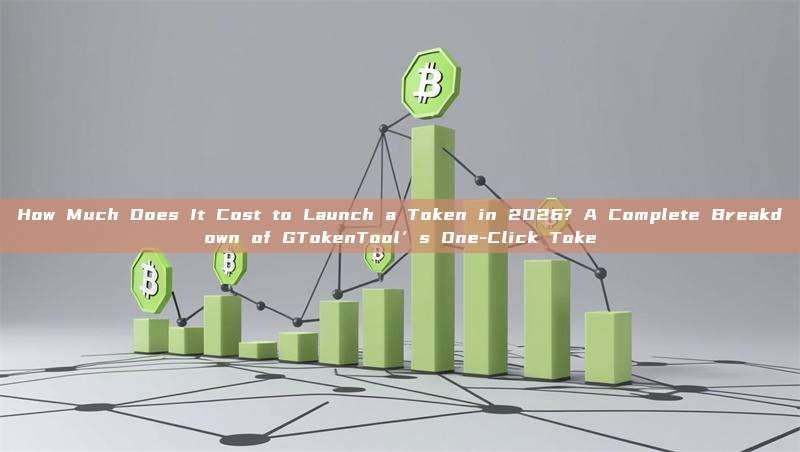
in 2026, using GTokenTool, you can launch a standard token for as little as ~0.01 BNB (about 6–8). All-in costs across major blockchains typically land between 5and300, depending on which chain you pick and what kind of token model you need. GTokenTool is currently one of the most feature-packed one-click token creation platforms in Web3, supporting over a dozen major blockchains — including BSC, Ethereum, Solana, Arbitrum, Base, Core, TON, TRON, Sui, and Polygon. It offers dozens of token models out of the box, from basic standard tokens to complex mechanisms like marketing buyback, holder dividends, LP rewards, reflection tokens, ERC-404, and ERC-314.
If you’re a beginner, you really only care about two things: First, how much cash do I need to have on hand? And second, where exactly is that money going? This guide breaks it all down from scratch. We’ll start with the total cost overview, then drill into the specifics for each chain, each token type, and cap it off with a detailed comparison table and an FAQ section. Whether you’re launching your first meme coin on BSC or building a serious community project on Solana, this 2026 fee guide will help you budget with confidence and avoid rookie mistakes.
1. Where Does Your Money Actually Go? Understanding the Fee Structure in 3 Minutes
Before we jump into chain-by-chain comparisons, we need to break down the phrase “launch cost” — because a lot of beginners only look at the platform’s headline fee and then get stuck mid-transaction when their wallet balance comes up short.
When you launch a token with GTokenTool, your wallet needs to cover two separate costs:
① Platform Service Fee: This is a one-time fee paid directly to the GTokenTool platform for creating your token. It’s how the platform sustains development and operations. Every time you click “Create Token” and confirm the transaction, GTokenTool charges the corresponding service fee. GTokenTool’s fees are among the most competitive across mainstream platforms, with zero hidden charges. Better yet, all of their smart contract code is open-source — so if you have security concerns, you (or an auditor you hire) can review the actual contract code yourself. That level of transparency is rare and builds real trust.
② Blockchain Gas Fee: This is the “fuel” paid to the blockchain network itself. Every on-chain action — deploying a contract, sending a transaction — consumes a certain amount of gas. Gas fees don’t go to GTokenTool; they go directly to the miners or validators securing the network. The exact amount depends on three things: the blockchain you choose (Ethereum is expensive, BSC is cheap), how congested the network is at that moment (busier = pricier), and how complex your operation is (a plain token is cheap, ones with complex dividend mechanics cost more gas).
One often-overlooked detail: gas fees fluctuate — sometimes a lot. A good rule of thumb is to keep 10–20% more in your wallet than the estimated total fee. If your balance barely covers the estimate and the network suddenly spikes, your transaction will fail. Then you’re stuck topping up your wallet (and paying more gas just to move funds), which wastes time and kills your momentum.
There’s also a third budget line item you need to think about: liquidity. Creating a token is just step one. If you want people to actually trade it on a decentralized exchange like PancakeSwap or Raydium, you’ll need to pair it with a base asset (BNB, SOL, ETH, etc.) and add liquidity. This can run anywhere from a few hundred to a few thousand dollars. It’s not technically a “launch fee,” but if you plan to do anything with your token, this needs to be in your total budget from day one.
2. Chain-by-Chain Token Launch Fee Breakdown
Below, I’ll unpack the fee structure for each major blockchain based on GTokenTool’s official docs (accurate as of May 2026). Keep in mind: because blockchain network conditions change constantly, the prices listed here may lag slightly behind real-time numbers. Always treat the live quote shown on the platform as the final number.
2.1 BSC (BNB Smart Chain) — The Beginner’s Go-To, Best Bang for Your Buck
BSC has stayed the top pick for first-time token launchers for years, and for good reason: dirt-cheap gas fees, blazing-fast confirmations, and the massive PancakeSwap ecosystem. GTokenTool supports more token models on BSC than any other chain:
Standard token (BEP-20) / Marketing buyback / Holder dividend / LP dividend / Reflection / NFT dividend / ERC-404 / ERC-314: All unified at 0.05 BNB
Black hole dividend model: 0.25% of transaction fees
NFT creation: 0.05 BNB
Mining pool creation: 0.3 BNB
NFT staking creation: 0.3 BNB
IDO creation: 0.01 BNB + 2% handling fee
On top of that, GTokenTool’s batch-send tools on BSC are great: batch token transfers cost just 0.01 BNB per 200 addresses, and adding holders costs as little as 0.00005 BNB per address. At BNB’s current price of around 600,theplatformfeeforastandardtokenisroughly30. Toss in a few bucks for gas, and your all-in cost lands between 35–45 — easily the highest value among major chains.
2.2 Ethereum — The Biggest Ecosystem, But Expect Higher Gas
Ethereum is the old guard of DeFi, home to Uniswap and the deepest on-chain liquidity, but its gas fees are hands down the highest of any EVM chain. GTokenTool’s Ethereum fee structure:
All token models (standard ERC-20, marketing buyback, dividends, etc.): Unified at 0.02 ETH
Staking mining: 0.02 ETH
NFT minting / Runes / IDO / Presale: 2% handling fee
Market-making bot: 0.00003 ETH per transaction
With ETH hovering around 3,000,theplatformfeeof0.02ETHcomesouttoabout60. But the real bite is the gas: deploying a contract on Ethereum mainnet often runs from 20to150 or more. All-in, you’re realistically looking at 80–250. If your budget is tight, you’re much better off choosing an Ethereum Layer 2 like Base or Arbitrum — same EVM ecosystem, same tooling, but gas fees are a tiny fraction.
2.3 Solana — Fastest Chain, Prime Meme Coin Territory
Solana’s insane TPS and microscopic transaction costs have made it the premier launchpad for meme coins and community tokens between 2024 and 2026. GTokenTool is fully compatible with Solana’s Token-2022 standard. Fees are:
Token creation (including BONK-style tokens): Approximately 0.08–0.2 SOL (regular users typically 0.12 SOL; VIPs get a lower service fee)
Orca stable pool creation: Platform charges 0.02 SOL plus a 0.08 SOL service fee
With SOL around 150,a0.12SOLservicefeeequalsabout18. Solana gas fees are so small they’re practically rounding errors (a single transaction is often less than 0.00001 SOL). Total cost: roughly 20–30, which puts Solana among the cheapest of all major chains — insanely beginner-friendly.
2.4 Base — Low-Cost Entry to the Ethereum Ecosystem
Base is Coinbase’s Ethereum Layer 2, inheriting Ethereum’s security and compatibility while gutting gas costs. GTokenTool’s Base chain fees:
All token models: Unified at 0.02 ETH
Staking mining / NFT minting / Runes / IDO / Presale: Same fee rate structure as Ethereum mainnet
Market-making bot: 0.00003 ETH per transaction
The platform fee matches Ethereum mainnet, but the key difference is that Base gas fees are roughly 1% of mainnet costs. Total all-in estimate: about 60–80. For projects that want to stay inside the Ethereum ecosystem without burning money on gas, Base is a major contender in 2026.
2.5 TON — Native On-Ramp to the Telegram Ecosystem
The TON blockchain sits at the doorstep of Telegram’s nearly one billion users, and its heat has been rising steadily through 2026. GTokenTool uses a flat fee model on TON:
All token models: Unified at 5 TON
Batch transfers: 0.02 TON per address
At roughly 5perTON,5TONisabout25. TON’s own gas fees are also minimal. Total cost: around 30–40. If your project is targeting Telegram communities, TON is arguably the highest-distribution-efficiency chain you can pick.
2.6 TRON — High Brand Recognition in Asian Markets
TRON has massive recognition, especially in Southeast Asia. GTokenTool’s setup on TRON is straightforward:
All token models: Unified at 500 TRX
With TRX around 0.10,500TRXisabout50. TRON’s gas and bandwidth model is reasonably wallet-friendly. Total all-in: roughly 55–70.
2.7 Other Blockchains at a Glance
Arbitrum (ARB): All token models at 0.02 ETH (similar structure to Ethereum)
Core: All token models at 0.1 CORE; staking mining 0.1 CORE
OKB (X Layer): All token models at 0.5 OKB; batch transfers 0.1 OKB
HECO: All token models at 1 HECO
PEGO: All token models at 1 PEGO
Sui: All token models at 10 SUI
Other EVM chains (e.g., Polygon): Token creation typically at 1 native token (e.g., ~1 POL)
3. Side-by-Side Fee Comparison Across Major Blockchains
Here’s the full snapshot in a single table so you can compare quickly and easily. (Gas estimates reflect normal network conditions as of May 2026. Real-time gas will vary.)
| Blockchain | Token Standard | Platform Fee | Approx. USD Value | Estimated Gas | Total Estimated Cost (USD) | Best For |
|---|---|---|---|---|---|---|
| BSC | BEP-20 | 0.05 BNB | ~$30 | ~$2–5 | $35–45 | First-time launchers, meme coins, community tokens |
| Ethereum | ERC-20 | 0.02 ETH | ~$60 | ~$20–150 | $80–250 | Formal projects, institutional tokens, DeFi protocols |
| Solana | Token-2022 | 0.08–0.2 SOL | ~$12–30 | ~$0.001 | $20–30 | Meme coins, community tokens, high-frequency trading |
| Base | ERC-20 | 0.02 ETH | ~$60 | ~$0.50–2 | $60–80 | Low-cost Ethereum ecosystem, Layer 2 projects |
| Arbitrum | ERC-20 | 0.02 ETH | ~$60 | ~$0.50–2 | $60–80 | Low-cost Ethereum DeFi projects |
| TON | TON standard | 5 TON | ~$25 | ~$1–3 | $30–40 | Telegram ecosystem, community distribution |
| TRON | TRC-20 | 500 TRX | ~$50 | ~$5–10 | $55–70 | Asian markets, payment-focused scenarios |
| Core | Core standard | 0.1 CORE | ~$10 | ~$1–3 | $15–25 | Low-cost testing, emerging ecosystems |
| OKB (X Layer) | OKB standard | 0.5 OKB | ~$20 | ~$1–3 | $25–35 | OKX ecosystem projects |
| HECO | HECO standard | 1 HECO | ~$5 | ~$1–2 | $10–15 | Ultra-low-budget options |
| PEGO | PEGO standard | 1 PEGO | ~$5 | ~$1–2 | $10–15 | Ultra-low-budget options |
| Sui | STS standard | 10 SUI | ~$5 | ~$1–2 | $10–15 | Sui ecosystem, high-performance chains |
| Other EVM | ERC-20 compatible | 1 native token | ~$1–5 | ~$1–5 | $5–15 | Niche chains, low-cost experiments |
USD values are based on mid-May 2026 reference prices. Actual costs will vary with token price fluctuations.
Quick takeaways from the table:
Absolute cheapest options: HECO, PEGO, and Sui chains — total cost can go as low as 10–15
Best value for your money: Solana (20–30) — gas is practically free, speed is unrivaled, meme ecosystem is mature
Least stress for beginners: BSC (35–45) — the most tutorials, the biggest community, the most people who’ve already debugged everything for you
For well-funded, serious projects: Ethereum mainnet (80–250) — highest ecosystem prestige, but be prepared for volatile gas
Bookmark this table. It’s your 2026 token launch budget cheat sheet.
4. Cost of Other High-Usage Tools Beyond Token Creation
GTokenTool isn’t just a “launch-a-token” button — it’s more of an all-in-one on-chain asset management suite. Here are a few other high-use features worth knowing about when you’re planning your full budget:
① Batch Transfer / Airdrop Tool: This is the go-to feature for community incentives. On BSC, it costs 0.005 BNB per batch; on Base and Arbitrum, it’s just 0.0001 ETH per batch. Compared to sending individual transactions, the batch tool saves you 60–90% on gas — covering 200 addresses costs roughly 0.01 BNB.
② Market-Making Bot: Non-members pay a small one-time unlock fee the first time they use it (chain-dependent; e.g., around 0.01 POL on Polygon). Once you’re a paid member, market-making bot usage is completely free. The bot supports four core strategies — buy pressure, sell pressure, wash trading volume, and high-sell/low-buy — giving even non-members access to basic quantitative-style tools.
5. Frequently Asked Questions (FAQ)
Q1: I’m a total beginner launching my first token. Which chain do you recommend?
If you’re brand-new, on a budget, and just want to test the waters, I strongly recommend BSC. Four reasons: First, there are more tutorials and walkthroughs in plain English than any other chain. Second, the 35–45 total cost won’t sting if you make a mistake. Third, PancakeSwap’s ecosystem is fully mature, so you can add liquidity and start trading right away. Fourth, MetaMask and other wallet tools are dead simple to set up. If your budget is even tighter and you don’t mind a slightly newer UI, Solana at 20–30 is also incredibly friendly.
Q2: Do I need to prepare gas fees on top of the platform service fee?
Yes, absolutely, and you need to have it ready upfront. The platform fee goes to GTokenTool, but deploying the contract on-chain requires gas, and that gas comes straight out of your wallet and goes to the network — not to GTokenTool. When you click “Create Token,” your wallet will pop up a confirmation window showing both the platform fee and an estimated gas fee. I can’t stress this enough: keep at least 10–20% more in your wallet than the combined total to avoid a failed transaction if the network gets congested.
Q3: What other expenses come after I launch the token?
Launching is just step one. If you want your token to be tradable on a DEX, you need to add liquidity. That means you’ll need to put up a matching amount of the base asset (BNB, SOL, ETH, etc.) — anywhere from a few hundred to a few thousand dollars — to pair with your token in a liquidity pool. Beyond that, if you want to run community airdrops, manage your token’s market, or batch-send tokens, GTokenTool has those tools ready to go with their own small fees listed above.
Q4: The official docs say “prices may not be updated in real time.” Which price should I follow?
Always go by the live quote displayed on the GTokenTool platform. Gas fees swing with network conditions, and service fees can adjust with market changes. Once your wallet is connected, the token creation page will show the exact current fee. I highly recommend taking a screenshot before you pay so you have a record.
Q5: Are GTokenTool’s fees expensive compared to other launch platforms?
No, they’re not. GTokenTool’s pricing sits at the low end among major one-click token launch platforms. Plus, every smart contract is fully open-source — you can audit it yourself or hire a third party. When you compare a few dozen bucks to the alternative (paying a Solidity dev thousands for a custom contract plus a separate audit), GTokenTool’s fee is basically a rounding error.
Q6:What if my token creation fails? Are fees refunded?
Blockchain transactions are final once confirmed. If your launch fails — usually due to insufficient gas or network congestion timeouts — the gas already spent by the network is gone. GTokenTool’s platform fee, however, may not have been actually deducted in certain failure scenarios. The best thing to do is screenshot your transaction hash and reach out to the admins in GTokenTool’s official Telegram group (https://t.me/GToken_EN) for help sorting it out.
Final Thoughts
In 2026, launching your own cryptocurrency is as easy as “connect a wallet, fill in a few fields, and hit confirm.” GTokenTool — with one of the widest chain coverages and richest sets of token models — has turned something that used to require professional programming chops and four-figure budgets into a sub-$50, five-minute task.
To recap the core takeaways from this guide:
Absolute cheapest lanes: HECO, PEGO, and Sui chains let you launch for as low as 10–15
Best starter recommendation: BSC (BEP-20 standard token, 0.05 BNB service fee, ~35–45 total)
Top meme coin pick: Solana (0.08–0.2 SOL service fee, ~20–30 total)
Serious project pick: Ethereum mainnet (0.02 ETH service fee, ~80–250 total depending on gas)
Most important budget rule: Always keep 10–20% extra in your wallet above the estimated fees so network spikes don’t ruin your day
Whether you’re dropping a community meme coin, a DeFi governance token, or just satisfying your curiosity about how on-chain creation works, GTokenTool gives you an entry point that’s affordable, transparent, and secure enough to trust. In 2026, launching a token is no longer a technical challenge — it’s an idea problem and an execution problem. With this guide in hand, you’re already ahead of 90% of people out there when it comes to cold, hard budget planning.