Governance tokens are a fundamental concept in the decentralized finance (DeFi) and Web3 world. Let's break it down.
Core Definition
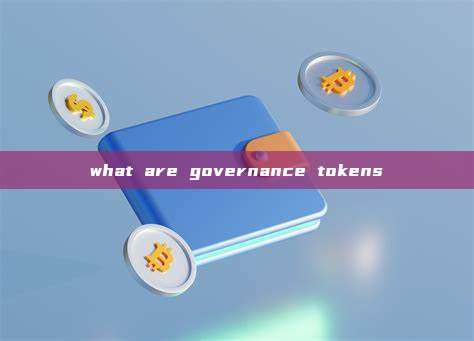
A governance token is a digital asset that grants its holders the right to participate in the decision-making process of a decentralized protocol, platform, or organization (often a Decentralized Autonomous Organization - DAO). It's essentially a voting share in a community-owned project.
Think of it like holding stock in a company, where shareholders vote on corporate matters. However, instead of a traditional company, it's a decentralized project with no central CEO or board.
Key Purposes and Functions
-
Voting Power: This is the primary function. Holders can vote on proposals that shape the project's future. Common proposals include:
-
Protocol Changes: Updating fees, adding new features, or changing economic parameters.
-
Treasury Management: Deciding how to spend the project's community treasury (e.g., funding grants, marketing, development).
-
Integrations: Deciding which other protocols or blockchains to partner with.
-
Team Hiring/Compensation: In some DAOs, voting on core team roles and pay.
-
Community Alignment: They incentivize users (holders) to act in the project's long-term best interest. If you own tokens, you want the project to succeed.
-
Ownership Stake: Holding tokens represents a form of ownership in the ecosystem, even if it doesn't represent equity in a legal sense.
How Do They Work? (The Typical Process)
-
Proposal Submission: A community member or core team drafts a formal proposal (e.g., "Should we reduce the lending interest rate on Compound from 5% to 4%?").
-
Discussion: The community debates the proposal on forums (like Discord or governance forums).
-
Voting: Token holders cast their votes. Usually, 1 token = 1 vote. Some systems allow "vote delegation" (letting an expert vote for you).
-
Execution: If the vote passes a predefined threshold (e.g., a majority with a minimum quorum), the proposal is automatically or manually executed by the team.
Well-Known Examples
-
Uniswap (UNI): Holders govern the world's largest decentralized exchange (DEX), voting on fees, treasury use, and upgrades.
-
Compound (COMP) & Aave (AAVE): Govern leading lending/borrowing protocols, deciding which assets to list, collateral factors, and interest rate models.
-
Maker (MKR): Governs the DAI stablecoin ecosystem, voting on critical risk parameters and system upgrades.
-
Curve (CRV): Governs a leading stablecoin DEX, with massive influence over "liquidity mining" rewards (often called "curve wars").
Benefits vs. Risks & Criticisms
| Benefits | Risks & Criticisms |
|---|---|
| Decentralization: No single point of control; community-driven. | Low Voter Turnout: Often, a small percentage of holders vote, leading to potential whale dominance. |
| Transparency: All proposals and votes are recorded on the blockchain. | Whale Dominance: Large holders ("whales") can sway votes to their own benefit, a form of "plutocracy." |
| Alignment: Incentivizes users to contribute to the ecosystem's health. | Speculation: Most tokens are traded on markets. Many buyers are speculators, not active community participants. |
| Innovation: Allows for rapid, global, and open collaboration. | Complexity & Apathy: Voting requires time, effort, and understanding. Many holders experience "voter fatigue." |
| Legal Uncertainty: The regulatory status of governance tokens (are they securities?) is still unclear in many jurisdictions. |
Important Nuances
-
Not All Tokens Are Governance Tokens: Many cryptocurrencies (like Bitcoin) are primarily mediums of exchange or stores of value, without voting rights.
-
Governance ≠ Control: In practice, core development teams often retain significant influence through proposal drafting and expertise, but the token holders have the ultimate veto power.
-
Value Accrual: A major debate is whether governance tokens effectively "capture value" from the protocol's success. This is not guaranteed and depends on the token's design (e.g., fee sharing, buybacks).
In a Nutshell
Governance tokens turn users into owners. They are the key mechanism for decentralized projects to manage themselves, distribute power, and evolve over time without a central authority. While they represent a revolutionary shift in organizational structure, they also face significant challenges in ensuring fair, informed, and active participation.