Here are the mainstream Layer 1 blockchains in 2026: Ethereum, Solana, BNB Chain, TRON, Avalanche, Sui, and Bitcoin (as the foundational Layer 1).
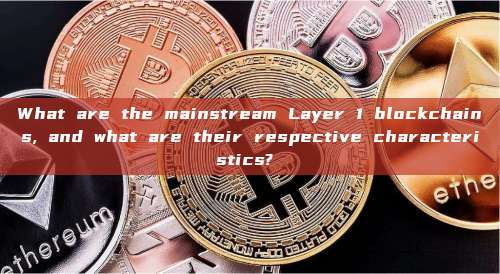
Each has its own strengths: Ethereum is the king of DeFi and smart contracts with the most mature ecosystem, though its base layer is slower; Solana offers blazing-fast speeds and super-low fees, perfect for games, meme coins, and everyday use; BNB Chain is EVM-compatible and cheap, loved by regular retail users; TRON dominates stablecoin transfers and payments; Avalanche supports custom subnets and appeals to institutions; Sui brings innovative object-based design and parallel execution for high-performance apps; Bitcoin focuses on the ultimate value storage and security.
These chains form the “backbone highways” of the blockchain world. For beginners, picking the right one is like choosing the best car for your needs—some are safe and reliable (Ethereum/Bitcoin), some prioritize speed (Solana/Sui), and others offer great value (BNB Chain/TRON). Below is a clear, beginner-friendly breakdown from an April 2026 perspective, including real-world data and applications.
Introduction: What Is Layer 1 and Why Does It Still Matter in 2026?
Layer 1 (L1) is the base blockchain layer that handles transaction validation, ledger maintenance, and consensus on its own—like the main roads of a city. Every DeFi app, NFT, game, payment system, or real-world asset (RWA) runs on or settles back to an L1.
In 2026, the competition among L1s has shifted from “who’s fastest on paper” to “who actually gets used by real people.” Stablecoins, institutional assets, consumer apps, and on-chain revenue drive adoption. According to DeFiLlama, total DeFi TVL across chains hovers around $90–120 billion, with Ethereum holding the lion’s share (~57%). CoinGecko and market data show the top L1 tokens commanding massive market caps, proving these networks have moved from hype to everyday infrastructure.
Newbies often ask: Why should I care about L1s? Because choosing the wrong chain is like picking a slow, expensive toll road—you’ll pay more in fees, face delays, and miss out on the best apps. Let’s break down the top players in simple terms.
7 Major Layer 1 Blockchains Explained (2026 View)
1. Bitcoin (BTC) — The Ultimate “Digital Gold” and Most Secure L1
Bitcoin launched in 2009 and uses Proof-of-Work (PoW). In 2026, it still boasts the highest market cap (~$1.37 trillion) and serves mainly as a store of value rather than a smart contract platform.
Key features: Extreme decentralization and security (the cost to attack it is astronomical thanks to global miners). However, it only handles about 7 transactions per second (TPS), and fees can spike during busy times. Layer 2 solutions like Lightning Network help with payments.
Beginner tip: Great for long-term holding, not for frequent trading. Think of it as a super-secure bank vault—slow but rock-solid.
2. Ethereum (ETH) — The DeFi and Smart Contract Champion
After switching to Proof-of-Stake (PoS) in 2022, Ethereum became the settlement and liquidity layer for crypto. As of early 2026, its DeFi TVL sits around $52 billion (over 57% market share), with stablecoin supply exceeding $165 billion.
Key features: Largest developer ecosystem with thousands of dApps; upgrades like Dencun and Pectra have made Layer 2s much cheaper; institutions treat it as the “blue-chip” blockchain. Base TPS is 15–30, but Layer 2s (like Base or Arbitrum) scale to thousands.
Beginner tip: Best starting point for DeFi, NFTs, or RWAs. Use Layer 2s to keep fees low. It’s like the reliable downtown highway—busy but connects everything.
3. Solana (SOL) — The High-Performance Consumer Favorite
Solana uses a unique Proof-of-History (PoH) + PoS design. In 2026, it shines for consumer apps with real TPS often between 1,000–4,000 (theoretical peak over 65,000) and fees usually under $0.001.
Key features: Leads in fee generation and transaction volume for memes, gaming, and payments; upgrades like Alpenglow have improved stability during congestion. TVL around $5.5 billion, with strong daily active users.
Beginner tip: Feels snappy in wallets and great for chasing trends. Early network hiccups are mostly fixed—think of it as a high-speed train: fast and affordable for daily rides.
4. BNB Chain — The Retail User’s Affordable Highway
BNB Chain runs on Proof-of-Staked Authority (PoSA) and is fully EVM-compatible. In 2026, TVL is about $5.3–5.4 billion, with millions of daily active addresses.
Key features: Very low fees (often <$0.01–0.03), solid TPS (real-world ~40–200), huge retail DeFi and gaming activity via PancakeSwap and Binance integration.
Beginner tip: Super easy entry for low-cost swaps, yield farming, or memes. Like a convenient city bike—cheap, accessible, but slightly more centralized than others.
5. TRON (TRX) — The Stablecoin Payment Powerhouse
TRON uses Delegated Proof-of-Stake (DPoS). In 2026, it remains the go-to for stablecoin transfers, with a massive share of USDT volume and near-zero fees.
Key features: High TPS (practical 60–2,000+), 3-second confirmations, ideal for remittances and P2P payments in emerging markets. TVL around several billion, but real transaction volume is even more impressive.
Beginner tip: If you mostly send stablecoins cheaply across borders, TRON is hard to beat—like an international money transfer app on steroids.
6. Avalanche (AVAX) — The Institutional and Custom Subnet Builder
Avalanche’s consensus delivers sub-2-second finality and supports custom Subnets (independent chains).
Key features: Strong EVM support, theoretical TPS up to thousands, popular for RWAs and enterprise pilots.
Beginner tip: A bit more technical, but flexible for builders and institutions. Picture it as modular Lego blocks—you can build custom chains on top.
7. Sui (SUI) — The Innovative High-Performance Up-and-Comer
Sui uses the Move language, an object-centric model, and parallel execution (Mysticeti consensus). In 2026, it’s gaining traction with strong developer growth.
Key features: Theoretical TPS over 100,000–297,000 for simple transactions, sub-second finality; focused on gaming, payments, and AI agents. TVL has grown significantly (reports vary from ~$1–5+ billion depending on peaks).
Beginner tip: Modern wallet and app experience. Great if you want cutting-edge performance—like a next-gen electric vehicle: efficient and full of new tech.
Data Comparison
Here’s a side-by-side look at key metrics (approximate as of April 2026 from sources like DeFiLlama, CoinGecko, and on-chain reports—always check live data as markets move fast):
| Blockchain | Consensus | Real-World TPS (approx.) | TVL (approx. $B) | Market Cap (approx. $B) | Main Strengths | Main Weaknesses | Best For |
|---|---|---|---|---|---|---|---|
| Bitcoin | PoW | 7 | Low (not DeFi-focused) | ~1,372 | Highest security & value storage | Slow speed, higher fees | Long-term holders |
| Ethereum | PoS | 15–30 (base) | ~52.4 | ~254 | Largest ecosystem, DeFi leader | Base layer can be pricier (use L2s) | DeFi, NFTs, RWAs |
| Solana | PoH + PoS | 1,000–4,000+ | ~5.5 | ~45–52 | Speed, low fees, consumer apps | Past congestion (mostly improved) | Gaming, memes, high-volume trades |
| BNB Chain | PoSA | 40–200 | ~5.3–5.4 | ~82 | EVM-compatible, retail-friendly | More centralized perception | Low-cost retail DeFi & gaming |
| TRON | DPoS | 60–2,000+ | Several | ~30 | Stablecoin transfers, cheap fees | Narrower smart contract ecosystem | Payments & remittances |
| Avalanche | Avalanche | Thousands (theoretical) | Moderate | Moderate | Custom subnets, institutional | Slightly lower mainstream hype | Enterprises & custom chains |
| Sui | Mysticeti | Hundreds to 100k+ (simple tx) | 1–5+ | ~3–10+ (varies) | Parallel execution, modern design | Ecosystem still growing | Gaming, AI, high-performance apps |
Notes: TPS varies by conditions; TVL and market caps fluctuate. Ethereum dominates TVL share, while Solana and TRON often lead in fees/revenue from real usage.
FAQ
Q1: What’s the difference between Layer 1 and Layer 2?
Layer 1 is the main chain that secures everything. Layer 2s are “express lanes” built on top (like Arbitrum on Ethereum) for faster, cheaper transactions that eventually settle back to L1.
Q2: Which L1 is the safest?
Bitcoin and Ethereum are widely seen as the safest due to their size, history, and decentralization. Newer chains are fast but carry different security trade-offs.
Q3: Where should a complete beginner start?
Try Ethereum (via a Layer 2 like Base) or BNB Chain first—wallets like MetaMask are simple, tutorials are everywhere, and apps are plentiful. For trends, check Solana with Phantom wallet.
Q4: How do transaction fees (gas) compare in 2026?
Solana, BNB Chain, and TRON are usually under a penny. Ethereum Layer 2s are also very affordable now. Bitcoin fees depend on network congestion. Always check real-time trackers.
Q5: Will one Layer 1 replace all the others?
No—2026 is a multi-chain world. Ethereum handles settlement, Solana powers consumer activity, TRON excels at payments, and so on. They complement each other.
Q6: How can I tell if an L1 is worth watching long-term?
Look at real metrics: growing TVL, genuine daily active users (not inflated), developer activity, and actual fee revenue (not just hype).
Q7: Is investing in L1 tokens risky?
Yes—crypto is volatile. Do your own research (DYOR), only invest what you can afford to lose, and treat L1 tokens like infrastructure stocks rather than get-rich-quick bets.
Conclusion
In 2026, the Layer 1 landscape is mature and specialized—no single chain wins everything. Ethereum remains the anchor, Solana and BNB Chain deliver everyday speed and affordability, TRON rules payments, while Avalanche and Sui bring innovation for specific needs. Bitcoin provides the unbreakable foundation.
For beginners: Start small. Download a wallet like MetaMask or Phantom, send $10–50 across a couple chains, and experience the speed and fees yourself. There’s no perfect chain—just the right one for your goals.
Technology keeps improving (upgrades like Firedancer on Solana, better parallelism on Sui, etc.), but the fundamentals stay the same: balancing security, speed, cost, and ecosystem. Check DeFiLlama, CoinGecko, and official blogs regularly to stay informed.
Blockchain in 2026 isn’t just theory—it’s infrastructure powering real finance and apps for millions. Pick your highway, drive safely, and enjoy the ride. The crypto world is open—get out there and explore!