In today's digital world, blockchain technology—like Bitcoin and Ethereum—has completely changed how we handle trust and transactions. It makes everything transparent and tamper-proof, which is awesome for security and verification. But there's a big downside: your privacy can take a hit. Picture every payment you make being out there in the open for anyone to see—your wallet address, amounts, timestamps, everything. In areas like finance, healthcare, or even voting, that kind of exposure is a huge risk.
The Privacy Problem in Blockchain: Why Do We Need Protection?
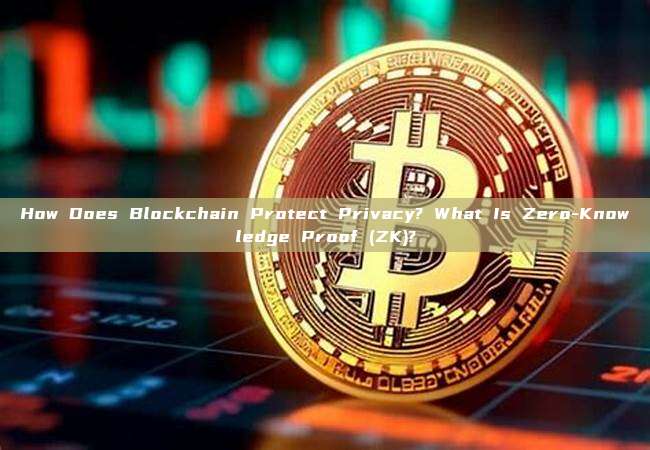
At its core, blockchain is built to be open and transparent. Every transaction gets recorded on a public ledger that anyone can check. That's great for preventing fraud and building trust without middlemen. But it also means your wallet address, transaction amounts, and timing are visible to the world.
Even though addresses look random (like a long string of letters and numbers), chain analysis tools can link them together over time—figuring out who you are, what you're buying, or how much you're holding. This is called linkability or metadata leakage.
-
In finance, hackers or scammers could target you.
-
In healthcare blockchains, sensitive patient data could leak and violate laws like HIPAA or GDPR.
-
For businesses, trade secrets or competitive info might get exposed.
Main Ways to Protect Privacy on Blockchain
Developers have come up with several privacy-boosting techniques. They fall into two big categories: mixing/obfuscation methods and advanced cryptography.
-
Coin Mixing (or Tumblers)
This is like throwing your coins into a big pool with everyone else's, then pulling out the same amount later. It breaks the direct link between sender and receiver.
Example: Tools like Tornado Cash used to do this.
Pros: Simple and pretty effective at first glance.
Cons: Needs lots of people in the pool to work well, and regulators often flag these as potential money-laundering tools. -
Ring Signatures
Picture a group of people signing a document, but you can't tell who actually signed it. Monero (XMR) uses ring signatures to hide the real sender among a bunch of decoys. It also uses stealth addresses so receivers get one-time-use addresses.
Pros: Strong default privacy—no extra steps needed.
Cons: Transactions get bigger as the "ring" size grows, hurting speed and scalability. -
Homomorphic Encryption
This lets you do math on encrypted data without decrypting it first. You could add or multiply encrypted balances and still get correct results.
Pros: Super powerful for private computations.
Cons: Extremely slow and resource-heavy—right now it's not practical for most blockchain use. -
Zero-Knowledge Proofs (ZK) — the star of the show
This is the most flexible and promising approach. We'll cover it in detail next.
What Exactly Is a Zero-Knowledge Proof (ZK)?
A zero-knowledge proof is a cryptographic trick where one person (the prover) convinces another (the verifier) that a statement is true—without revealing anything else.
-
Completeness: If the statement is true and both sides follow the rules, the verifier will be convinced.
-
Soundness: If the statement is false, no cheater can trick an honest verifier (except with tiny probability).
-
Zero-Knowledge: The verifier learns nothing beyond the fact that the statement is true.
A classic beginner-friendly example: Imagine a cave with two doors (A and B) connected by a secret password-protected door in the middle. You want to prove to your friend you know the password—without telling them what it is.
You go into the cave through door A. Your friend stands outside and randomly shouts "Come out door B!" If you know the password, you can slip through the secret door and exit B. Repeat this many times with random choices—if you always succeed, your friend believes you know the password... but still has zero clue what it actually is.
There are interactive ZK (lots of back-and-forth) and non-interactive ZK (just one proof anyone can check).
The big ones used in blockchain are:
-
zk-SNARKs (Zero-Knowledge Succinct Non-Interactive Argument of Knowledge): Tiny proofs, super fast to verify, but often need a trusted setup ceremony.
-
zk-STARKs (Zero-Knowledge Scalable Transparent Argument of Knowledge): No trusted setup, more post-quantum secure, but proofs are larger.
How ZK Works on Blockchain + Real-World Uses
On blockchain, ZK lets you prove a transaction is valid (correct balances, no double-spending, etc.) without showing the amounts, addresses, or other details.
The flow is simple:-
You (prover) create a proof using your private data and keys.
-
You send the proof (and maybe minimal public info) to the blockchain.
-
Nodes verify the proof quickly—without seeing your secrets.
-
Zcash: The first big crypto to use zk-SNARKs for fully shielded transactions—sender, receiver, and amount all hidden, yet still verifiable.
-
Ethereum Layer 2 solutions (like zk-Rollups): Bundle hundreds of transactions into one tiny proof, boosting speed and adding privacy at the same time.
-
Identity: Prove you're over 18 or a citizen without showing your birthday or full name.
-
Supply chain: Show a product meets standards (e.g., fair trade) without revealing suppliers or costs.
Benefits: Better privacy, scalability (fewer data on-chain), compliance with regs like GDPR.
Challenges: Generating proofs takes serious computing power (though hardware is improving fast). zk-SNARKs' trusted setup carries some risk if done wrong.
Comparison Table
Here's a side-by-side look at the main privacy techniques (based on 2025–2026 data and research):
| Technique | Privacy Level | Computational Cost | Key Advantages | Main Drawbacks |
|---|---|---|---|---|
| Zero-Knowledge Proofs (ZK) | High (hides everything, just proves validity) | Medium (proof generation heavy, verification fast) | Versatile, scalable, no third-party trust needed long-term | High compute for proof gen; some types need setup |
| Coin Mixing | Medium (breaks links but traceable via pool) | Low | Easy, cheap | Relies on pool size; regulatory scrutiny |
| Ring Signatures | High (hides sender) | Low to Medium | Built-in privacy (e.g., Monero) | Larger tx size, less scalable |
| Homomorphic Encryption | Very High (compute on encrypted data) | Very High | Enables complex private math | Too slow/expensive for most real-world use |
ZK usually wins for the best mix of strong privacy and practical performance.
Q&A Section
-
How does blockchain actually protect privacy?
Mostly through cryptography like ZK, ring signatures, or mixing. ZK is the most powerful because it proves things without revealing info. -
What is zero-knowledge proof / ZK in simple terms?
It's a way to prove you know something (or something is true) without showing the actual details—like proving you have a key without handing over the key. -
How does ZK keep things private on blockchain?
It hides amounts, addresses, etc., and only puts a tiny proof on-chain that nodes can quickly check is valid. -
What's the difference between ZK and ring signatures?
Ring signatures mainly hide who sent something (great for sender privacy). ZK is more general—you can prove almost any statement privately. -
What are the downsides of ZK?
Creating proofs takes a lot of computing power right now, and older versions (like some zk-SNARKs) needed a trusted setup. -
Is ZK already being used in real projects?
Yes! Zcash for private coins, Polygon zkEVM and zkSync for fast/cheap Ethereum scaling, and more. -
Where is ZK headed in the future?
It's combining with other tech (like fully homomorphic encryption) for even more private apps in DeFi, identity, and AI. -
How can a total beginner start learning ZK?
Start with simple explanations (like the cave example), then check out Chainlink docs, Zcash resources, or play with tools like Circom.
Conclusion
Protecting privacy on blockchain is all about finding the right balance—keeping the network transparent enough to trust, but private enough to be safe and useful. Zero-knowledge proofs stand out as one of the smartest, most elegant solutions: prove without revealing.
From Zcash's shielded transactions to Ethereum's scaling layers, ZK is already making blockchain more private and efficient. As hardware gets better and the tech matures, expect ZK to power the next wave of Web3 apps—everything from confidential finance to private voting.