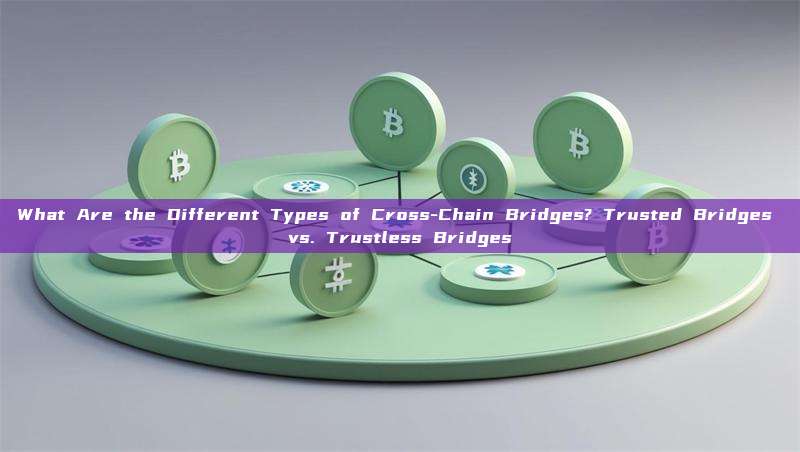
Cross-chain bridges mainly fall into two big categories: Trusted Bridges and Trustless Bridges (also called non-custodial or trust-minimized bridges).
Trusted bridges rely on a centralized or semi-centralized third party—like a team of validators, a multisig committee, or an operator—to verify and move your assets. They’re fast, cheap, and super easy to use, but you have to trust that third party not to steal your funds, get hacked, or mess up.
Trustless bridges don’t ask you to trust any specific person or company. Instead, they use smart contracts, light clients, zero-knowledge proofs (ZK), or the blockchain’s own math to verify everything automatically. They’re generally much safer and more decentralized, but they can be slower, more expensive, and a bit more complicated for beginners.
In simple terms: A trusted bridge is like handing your money to a bank teller—quick and convenient, but you’re counting on the bank. A trustless bridge is like using a secure vending machine run by unbreakable code—you keep control, but it might take a little longer.
By 2026, trustless (or trust-minimized) bridges already handle over 70% of cross-chain transaction volume in many DeFi sectors, yet trusted bridges remain popular with newcomers because of their speed and simplicity. Bridge hacks have cost the industry billions historically, with most big losses coming from trusted models.
Here’s a clear, beginner-friendly breakdown so you can understand exactly how they work, compare them with real data, and make smart choices when moving your crypto between chains like Ethereum, Solana, Base, or Arbitrum.
Introduction: Why Cross-Chain Bridges Matter So Much
Think of blockchains as separate islands in a big ocean. Ethereum is the busy financial hub, Solana is the speedy newcomer, BNB Chain keeps things cheap, and Layer 2s like Base or Arbitrum offer fast, low-fee experiences. These “islands” don’t talk to each other naturally—your tokens can’t just jump from one to another.
Cross-chain bridges are the bridges (or ferries) that connect them. They let you move USDT from Ethereum to Solana, send NFTs across networks, or move liquidity to chase better yields in DeFi—all without selling everything and buying back on the other side.
In 2026, DeFi’s total value locked (TVL) is massive, and bridges lock tens of billions in assets while processing huge daily volumes. But bridges are also hackers’ favorite target. Historical losses from bridge exploits exceed $2.8–3.2 billion, making up a huge chunk of all Web3 hacks. That’s why understanding the difference between trusted and trustless bridges is one of the most important things any beginner can learn.
This guide walks you through everything step by step: how bridges work, the two main types with real pros and cons, a data comparison table, answers to the most common newbie questions, and practical tips to stay safe. By the end, you’ll feel confident moving assets across chains.
How Cross-Chain Bridges Actually Work (Super Simple Explanation)
Most bridges follow a similar three-step process:
On the source chain (where your money starts): You lock or burn your tokens in the bridge’s smart contract.
Verification step: The bridge proves to the destination chain that you really sent the assets.
On the destination chain: The bridge unlocks native tokens or mints a “wrapped” version (like wETH) for you.
The big difference between bridge types comes down to Step 2—who (or what) does the verifying? That’s where the trust model comes in.
Trusted Bridges Explained
What they are: Trusted bridges (sometimes called custodial bridges) depend on a specific group of people or entities—validators, operators, or a multisig committee—to confirm transactions. You have to trust that these parties will behave honestly and keep the system secure.
How they work: You send your assets to the bridge. The trusted validators review the transaction and then sign off so the destination chain can release equivalent tokens. Examples include early versions of Binance Bridge, certain parts of Wormhole’s Guardian network (which still has trust elements), and other centralized or federated solutions.
Pros (why beginners love them):
Very fast—often just seconds to a few minutes.
Low fees and minimal slippage.
User-friendly—one-click experience in most wallets.
Great liquidity and support for many chains and small transfers.
Cons (the risks you need to know):
You’re giving up temporary control of your funds to a third party.
If the validators’ keys get stolen, the operator gets compromised, or the multisig fails, your money can disappear.
Big historical hacks like Ronin ($600M+), Wormhole ($320M), Nomad ($200M), and others mostly hit trusted or semi-trusted bridges.
More vulnerable to regulatory pressure or single points of failure.
In 2026, trusted bridges are still handy for quick, small transfers, but they’re not ideal for large amounts or long-term holding.
Trustless Bridges Explained
What they are: Trustless bridges (also called non-custodial or trust-minimized) remove the need to trust any specific third party. Security comes from code, math, and the underlying blockchains themselves—things like light clients, ZK proofs, optimistic verification, or direct consensus checks.
How they work: The destination chain can independently verify what happened on the source chain using cryptographic proofs or built-in mechanisms. Popular examples include Cosmos IBC (light-client based), Across (intent-based with optimistic verification and relayers), Stargate (liquidity network on LayerZero), and newer ZK-powered bridges.
Pros:
Highest security—no single entity controls your funds.
You stay in control the whole time through smart contracts.
Fully transparent and auditable on-chain.
Aligns with blockchain’s core philosophy of decentralization.
Cons:
Can be slower (minutes to hours) because of finality waits or challenge periods.
Higher gas fees due to more complex verification.
Slightly more technical—new users might need to understand concepts like “proofs” or “dispute windows.”
Liquidity can vary, sometimes leading to bigger slippage on large trades.
Many modern bridges sit in the middle of the spectrum (“trust-minimized”) rather than being 100% trustless or fully trusted. The industry trend in 2026 is clearly moving toward trustless and intent-based designs for better safety without killing usability.
Other Ways to Classify Bridges (Quick Bonus Knowledge)
Beyond trust level, bridges also differ by mechanism:
Lock-and-Mint: Lock tokens on source, mint wrapped versions on destination (most common).
Burn-and-Mint: Destroy on source, recreate on destination.
Liquidity Networks: Use shared pools for fast swaps without wrapping (like Stargate or Across).
These can pair with either trusted or trustless models.
Data Comparison
Here’s a side-by-side look based on 2025–2026 industry trends, DeFiLlama data, and security reports:
| Aspect | Trusted Bridges | Trustless Bridges | Beginner Tip |
|---|---|---|---|
| Security | Lower (relies on third parties; single points of failure) | Higher (cryptographic verification; no extra trust) | Use trustless for big amounts |
| Speed | Fast (seconds to minutes) | Slower (minutes to hours) | Small/quick transfers → trusted |
| Fees | Usually lower | Higher (verification costs more) | Budget-conscious → trusted |
| Custody | Temporary handover to third party | You control via smart contracts | Privacy-focused → trustless |
| Market Share (2026) | ~30% or less (declining in volume) | 70%+ of cross-chain activity | Trend is clearly shifting |
| Hack History | Most major losses (e.g., Ronin, Wormhole, Nomad) | Far fewer (harder to attack multiple chains) | Trusted bridges were main targets |
| Ease of Use | Very beginner-friendly | Moderate learning curve | Start with trusted, then upgrade |
| Best For | Daily small moves, CEX-like experience | Large transfers, long-term DeFi | Match to your risk tolerance |
Key Takeaway from the Numbers: Bridge exploits have caused over $2.8 billion in losses historically, with the vast majority tied to trusted models. Yet trustless solutions now dominate volume because users and the market are demanding better security.
Q&A
Q1: Are cross-chain bridges safe overall?
No bridge is 100% risk-free, but trustless ones are significantly safer. Always use small test transactions first, check audits, and never move more than you can afford to lose. Bridge hacks have made up a huge portion of DeFi losses, but better designs are reducing risks in 2026.
Q2: Which type is better for complete beginners?
Start with trusted bridges for small amounts when you want speed and simplicity. Once you’re comfortable, switch to trustless options for anything larger. Many people use aggregators (like Jumper) that automatically pick the best route.
Q3: How do hackers usually attack bridges?
On trusted bridges: stealing validator keys or compromising multisigs. On trustless ones: smart contract bugs or logic flaws (much rarer and harder). Recent 2026 examples include smaller incidents like CrossCurve (~$3M) and IoTeX bridge issues tied to keys or validation.
Q4: How can I tell if a bridge is trusted or trustless?
Read the docs. If it mentions “validators,” “guardians,” “multisig,” or a central team— it’s likely trusted. Words like “light client,” “ZK proofs,” “optimistic verification,” or “smart contract only” point to trustless. Check sites like DeFiLlama for risk scores too.
Q5: Are there extra costs besides gas fees?
Yes—bridge service fees (often 0.1–1%), slippage on liquidity-based bridges, and sometimes hidden costs during high traffic. Trusted bridges tend to feel cheaper overall.
Q6: What bridges should beginners try in 2026?
For trusted/semi-trusted feel with good speed: Across Protocol (intent-based, fast), Stargate. For more trustless: IBC in Cosmos ecosystems, LayerZero-powered options, or pure ZK bridges. Always verify the latest audits and TVL on DeFiLlama.
Q7: Will all bridges become fully trustless in the future?
The direction is “trust-minimized” + heavy ZK and intent-based designs. Speed is improving, but there will always be trade-offs. 2026 already shows strong growth in safer models.
Q8: What safety checklist should I follow before bridging?
Double-check the official website and contract addresses.
Do a tiny test transfer first.
Review recent audits and TVL.
Use hardware wallets and enable 2FA where possible.
Never click suspicious links—phishing is common.
Final Thoughts
Cross-chain bridges are essential tools in today’s multi-chain world, but there’s no one-size-fits-all solution. Trusted bridges give you convenience and speed—perfect for everyday small moves. Trustless bridges give you stronger security and true ownership—ideal for bigger amounts or serious DeFi plays.
The industry in 2026 is clearly evolving toward safer, more decentralized designs, but trusted options still serve a real purpose for new users. Remember these three golden rules:
Always test small first.
Understand the trust model before sending big money.
Never chase yields so hard that you ignore security.
Once you get the hang of it, moving assets across chains becomes second nature. Bookmark this guide, come back when you’re ready to bridge, and feel free to ask about specific chains or protocols in the comments. Stay safe out there in the multi-chain ocean!