1. What is Batch Aggregation?
SOL batch aggregation refers to the process of consolidating SOL tokens (the native cryptocurrency of the Solana blockchain) scattered across multiple wallet addresses into one or more primary wallet addresses. In cryptocurrency operations, users may hold multiple wallets for various reasons (e.g., airdrops, multi-account management, or diversified investments), each containing small amounts of SOL. Batch aggregation helps users manage their assets more efficiently.
Functions of Batch Aggregation:
Simplified Asset Management: Centralized control for easier tracking and usage.
Reduced Operational Costs: Saves time and effort in managing multiple addresses.
Improved Capital Efficiency: Avoids inefficiencies caused by fragmented funds.
Lower Transaction Fees: Consolidating small balances reduces overall future transfer fees.
Enhanced Security: Moves funds from less frequently used wallets to more secure primary wallets.
2. Methods for Batch Aggregation
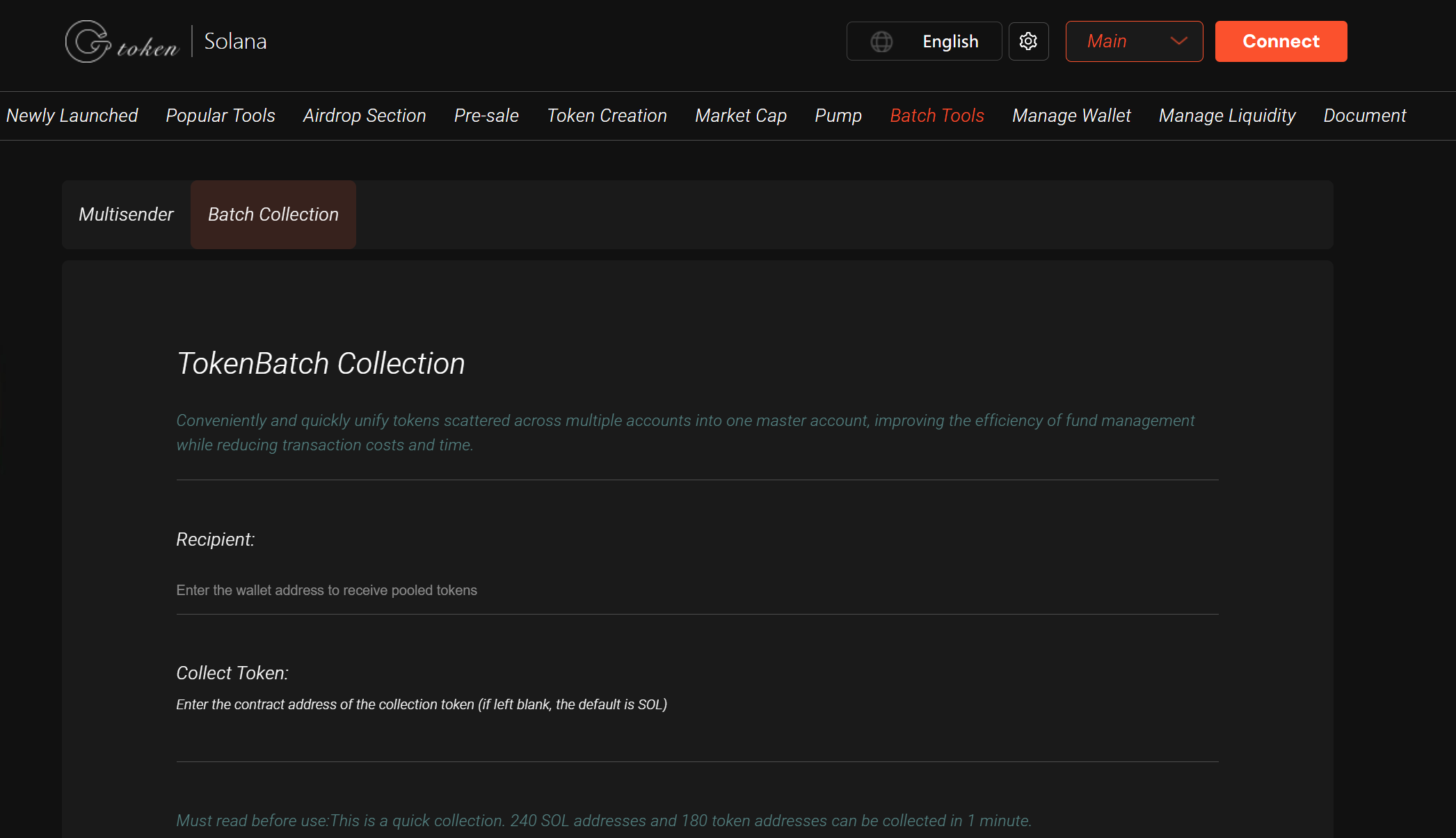
Method 1: Using GTokenTool for Batch Aggregation
SOL Batch Aggregation Tool: https://sol.gtokentool.com/zh-CN/batchTool/gather
Steps:
Visit the service website.
Connect and authorize your wallet.
Configure aggregation parameters.
Execute the aggregation process.
Method 2: Using Command-Line Tools (Solana CLI)
Steps:
Install the Solana CLI tool.
Prepare a file containing all private keys.
Write a script for batch transfers.
Example Code:
# Set the main wallet  solana config set --keypair ~/main-wallet.json

# Batch transfer script  for wallet in $(cat wallets.list); do
  solana transfer --from ~/$wallet.json --to MAIN_WALLET_ADDRESS --amount ALL --fee-payer ~/main-wallet.json
done
Method 3: Custom Scripts (JavaScript/Python)
Best for: Developers handling large-scale aggregations.
Python Example:
from solana.rpc.api import Client
from solana.account import Account
from solana.transaction import Transaction
from solana.system_program import Transfer

client = Client("https://api.mainnet-beta.solana.com")  main_wallet = Account()  # Primary wallet private key  fee_payer = Account()   # Fee-paying wallet  wallets = [...]         # List of wallets to aggregate  for wallet in wallets:
    balance = client.get_balance(wallet.public_key())
    if balance > 5000:  # Reserve a small SOL amount for fees
        amount = balance - 5000
        txn = Transaction().add(
            Transfer(
                from_pubkey=wallet.public_key(),
                to_pubkey=main_wallet.public_key(),
                lamports=amount
            )
        )
        client.send_transaction(txn, wallet, fee_payer)
3. Key Considerations for Batch Aggregation
Transaction Fees:
Each transaction costs ~0.000005 SOL in fees.
Ensure source wallets have enough SOL to cover fees.
Consider using fee delegation features.
Security Risks:
Private Key Safety: Batch operations involve handling multiple keys—ensure a secure environment.
Phishing Risks: Verify website authenticity when using third-party services.
Transaction Confirmation: Validate blockchain confirmations for each transfer.
Compliance:
Large aggregations may trigger exchange risk controls.
Maintain transaction records for tax reporting.
Network Conditions:
Operate during low network congestion.
Monitor Solana network status (TPS, latency, etc.).
Address Verification:
Double-check destination addresses before aggregation.
Test with small amounts first.
Wallet Types:
Distinguish between hot and cold wallets.
For significant funds, use a hardware wallet as the primary destination.
4. Summary
SOL batch aggregation is a common asset management practice in the Solana ecosystem. Proper execution significantly improves SOL management efficiency, laying the groundwork for future investments, trading, staking, or other operations.